Stop Trying to Rank in ChatGPT. Buy the Click Instead.

1.1 BILLION PEOPLE ARE TALKING TO CHATGPT. YOUR CHARITY ISN’T IN THE ROOM.
Here’s the objective: charities want more clicks and traffic out of ChatGPT, Claude, Gemini, Copilot — the whole new category people are now calling “AI search.”
And here’s the wall standing in the way of that objective:
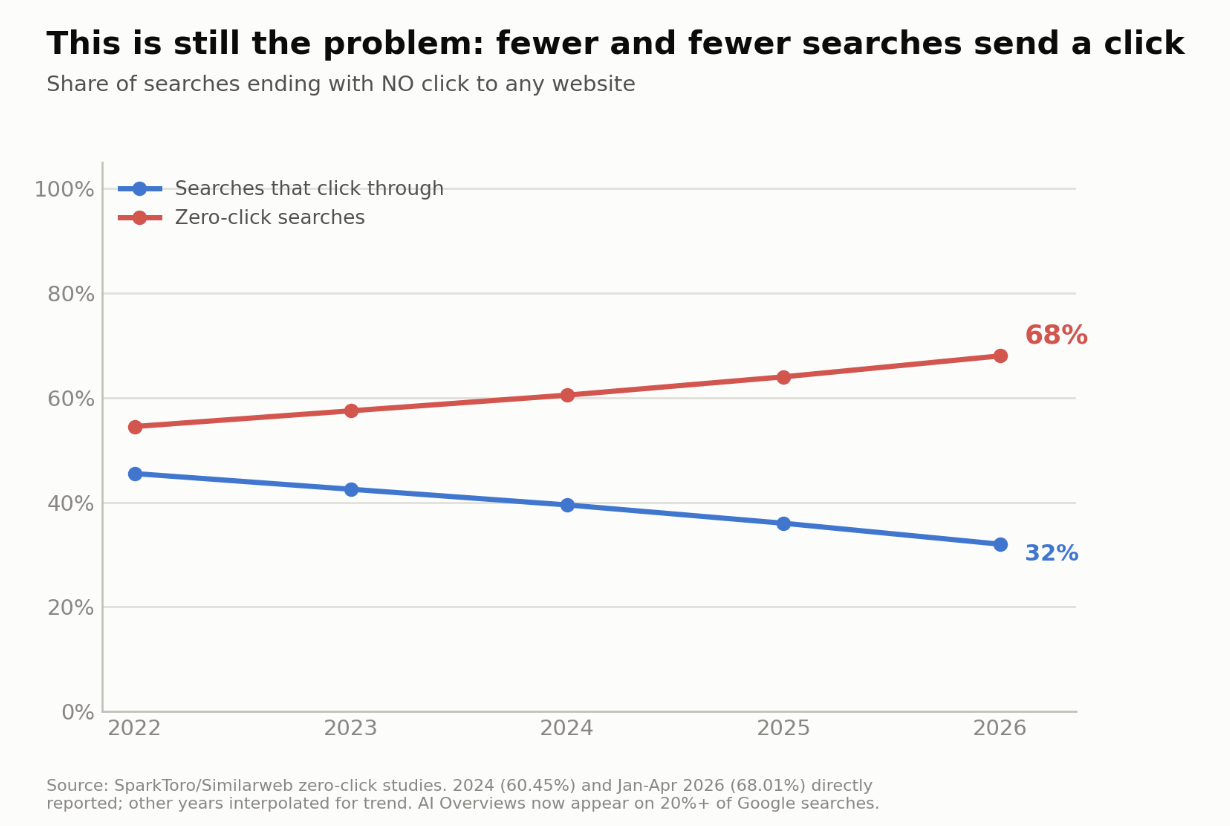
68% of AI-accelerated searches end in ZERO clicks.
No visit. No landing page. No donation form. Nothing.
BUT, before we talk about getting through that wall, sit with WHY it’s worth fighting through in the first place.
Because the size of this opportunity is genuinely hard to overstate.
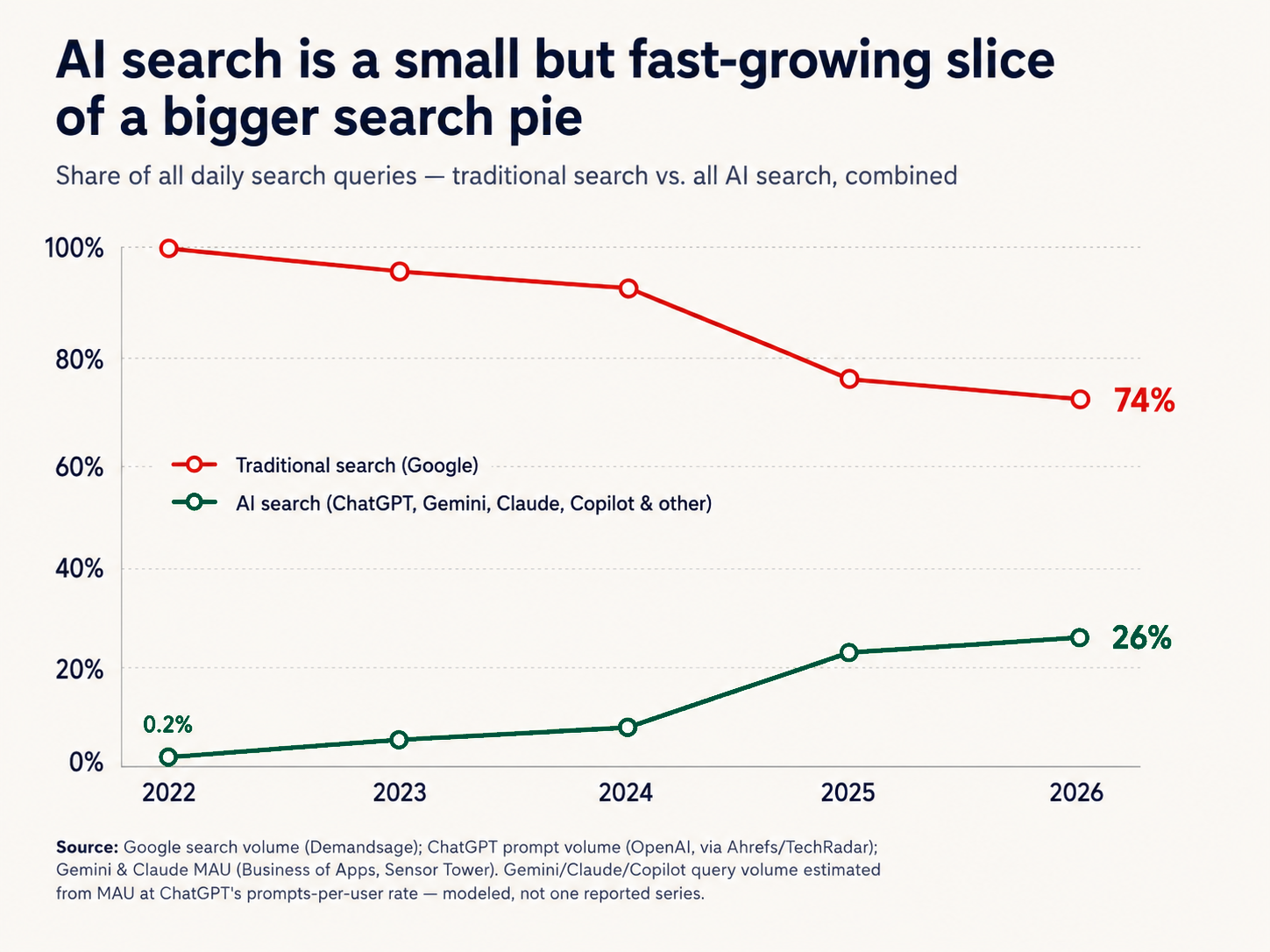
First, the search pie itself is growing, and AI is eating a bigger slice of organic search every year.
Traditional search hasn’t collapsed — Google is still doing north of 16 billion searches a day. But total query volume — old-school search PLUS AI chat — is bigger than it’s ever been, and AI’s slice of that combined pie has gone from basically nothing in 2022 to somewhere around 26% now. That’s a real audience, doing real research, inside a chat window instead of a search bar:
Second: yes, ChatGPT’s share of THAT audience is shrinking. But that doesn’t matter — because the whole category is exploding.
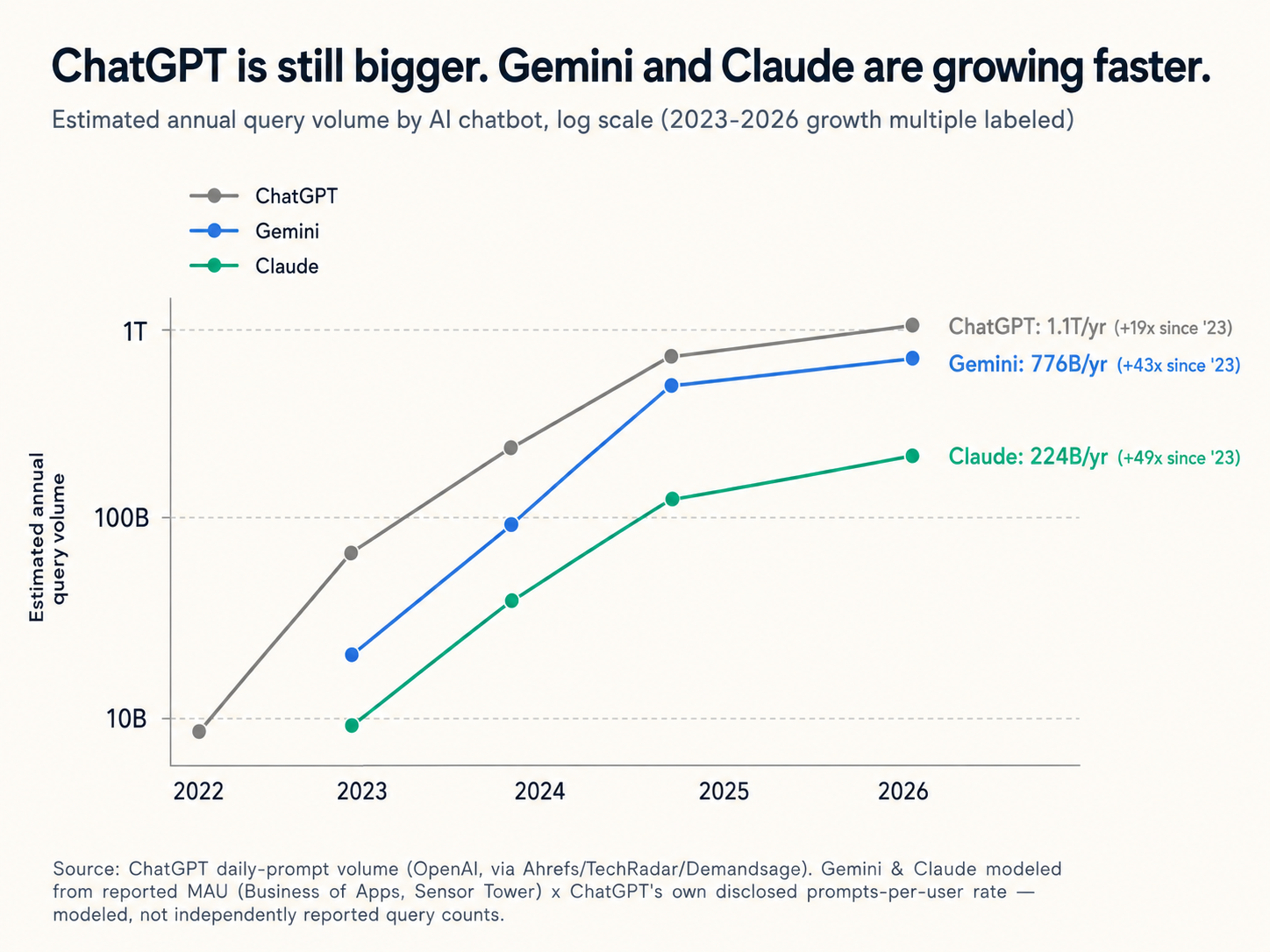
Gemini and Claude are both taking real share off ChatGPT — Gemini went from under 9% to nearly 28% of AI-platform visits in a year, Claude nearly quadrupled. Every hot take you’ve read says “ChatGPT is losing.” Look again: total AI-platform visits grew 70% year over year over that same window. ChatGPT’s SHARE went down. Its actual audience went UP. A shrinking piece of a much bigger pie is still … MORE PIE.
Third: While ChatGPT is the biggest room in the building, almost everyone in it is … on the FREE plan!
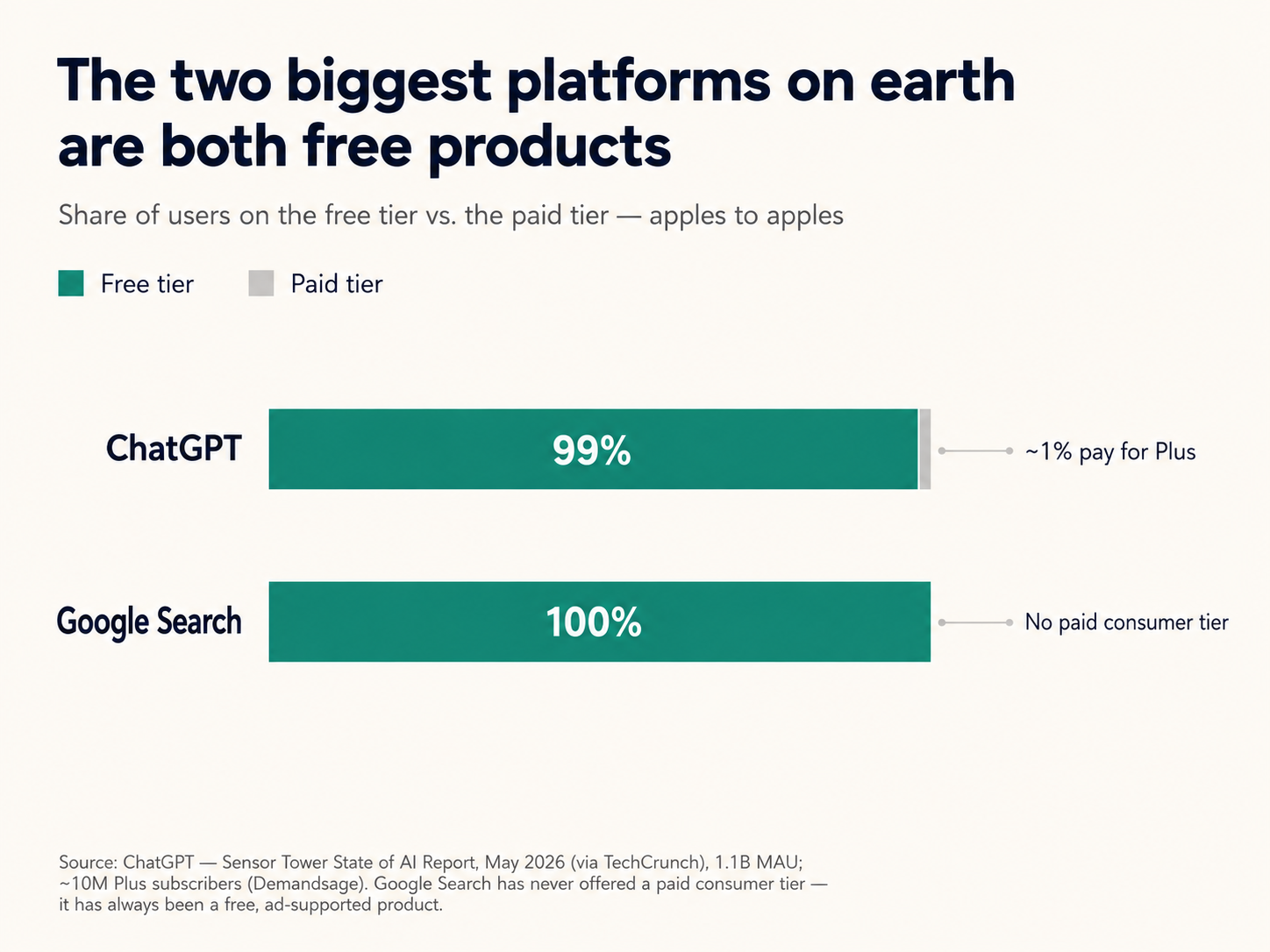
1.1 billion monthly ChatGPT users. Roughly 10 million of them pay for Plus. Do that math — that’s under 1%. The free tier ISN’T the funnel into ChatGPT’s business. For the overwhelming majority of the people using it, the free tier IS the product. If you’re trying to reach “everyday people,” this is where they already are.
Now here’s the part that’s still the problem — the reason this whole article exists.
Even with all that growth — bigger pie, bigger audience, free-tier-dominant behavior — the share of searches that actually SEND someone somewhere keeps shrinking. 68% zero-click as of early 2026, up from about 60% just two years ago, up from 0.2%% back in 2022.
So: massive, growing, free-tier-heavy audience. Increasingly locked behind an answer box that doesn’t send them anywhere.
That’s the opportunity, and that’s the wall. Now let’s talk about why most nonprofits are stuck in front of it.
NONPROFITS CAN’T WIN THE AUTHORITY GAME.
The standard advice for getting cited inside an AI answer is some version of “become an authority.” Publish more. Publish deeper. Get cited by other sites. Feed the model enough of your expertise that it starts quoting YOU back to the person asking.
Fine in theory. Watch what happens in practice at most charities.
Content Volume is the whole game, and yet, content volume is exactly what nonprofit content teams do NOT have. Ranking as an “authority” in AI search is a content-production problem before it’s anything else — and most nonprofit comms teams are one or two people, already stretched across the annual appeal, the gala invite, three grant reports, and whatever the ED needs by Friday. Ask them to also become a publishing engine that can compete with organizations 50x their size for AI citations, and you already know the answer.
Then there’s the internal machinery. A single blog post at most charities has to survive: Legal review. Brand review. Program-team review. Comms-director review. Sometimes a board sign-off, depending on the topic.
By the time a piece of content clears all of that, the moment it was meant to capture is gone — and you’ve published ONE piece, when the game requires several articles to be published, every single day, 5 days a week.
Add the usual suspects on top: no dedicated budget for content or SEO/GEO tooling. No internal owner whose full-time job this is. Silos between programs, comms, and digital that mean nobody’s even coordinating what gets published where.
Everybody’s clear that “AI visibility” matters. Almost nobody has the capacity, budget, or organizational focus to go win
Put it together: charities can’t out-publish their way to AI authority. Meanwhile the audience keeps growing and the zero-click wall keeps getting higher.
There has to be a way in, that doesn’t require winning a content arms race you were never resourced to win.
SKIP THE AUTHORITY GAME. BUY THE ANSWER SLOT.
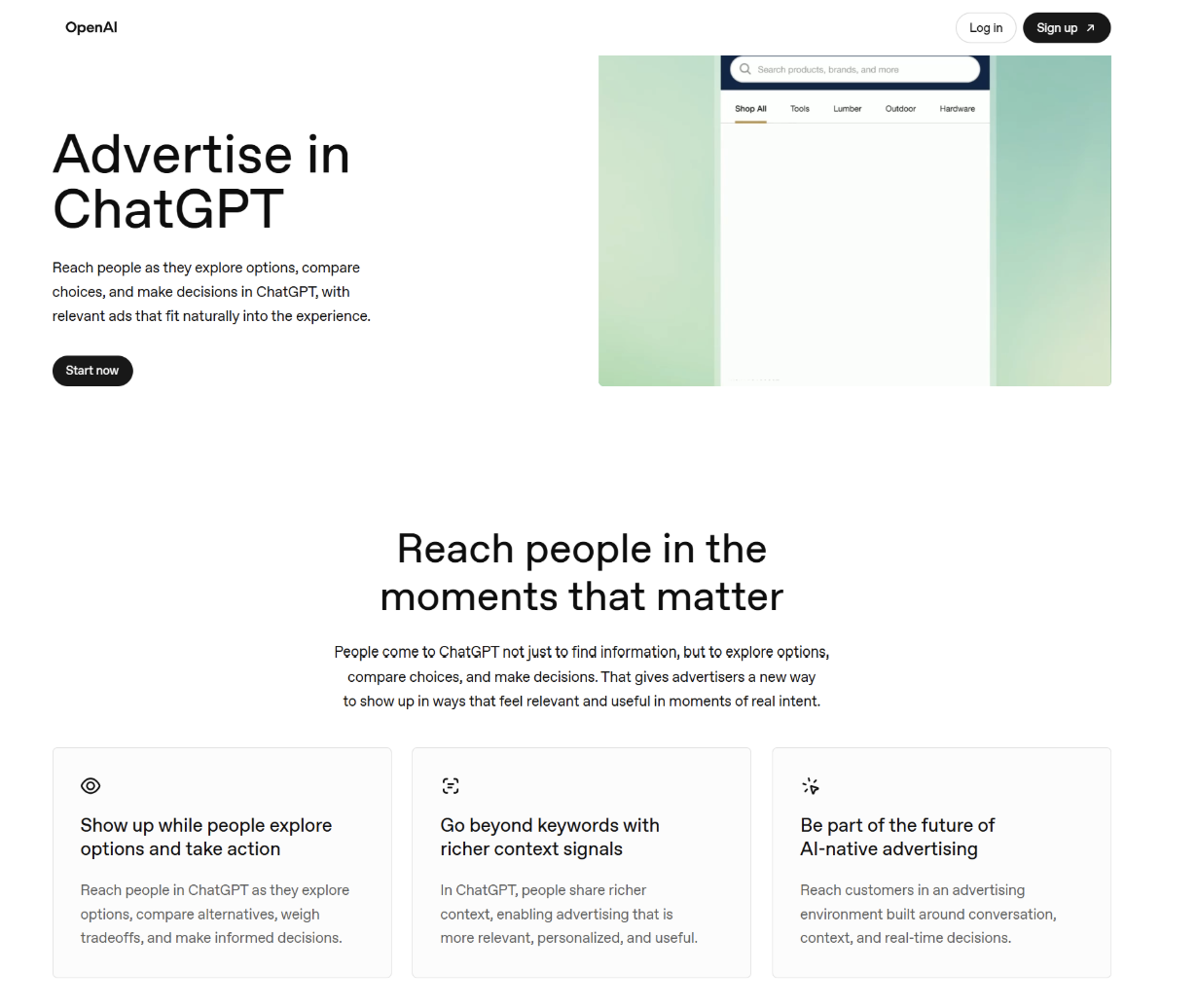
There is. It’s ChatGPT Ads, and the whole point of this section is that it is genuinely turnkey:
Here’s what’s true about it as of right now:
ChatGPT Ads launched in the US in February 2026, expanded to Canada, Australia, and New Zealand in March, and to the UK, Mexico, Brazil, Japan, and South Korea by May. The product is live, today, in most of the markets a US-based nonprofit cares about.
Early access ran through ad agencies with $200,000–$250,000 minimum commitments — a non-starter for basically every nonprofit media budget. BUT, since April 2026, OpenAI has opened self-serve tools with no minimum, plus CPC pricing alongside the original CPM model. That is the difference between “enterprise pilot” and “something your team can actually turn on this quarter.”
It shows up exactly where the audience is. The ads run only on Free and Go tier accounts — Plus, Pro, Enterprise, and Education stay ad-free. Go back to that pie chart above: that’s not a niche placement. That’s substantially ALL of ChatGPT’s 1.1 billion monthly users. The exact free-tier audience you just saw dominates this whole category is the exact audience this ad product reaches.
And it’s contextual, not creepy. Ads are matched to what someone is actively asking about in the moment — not layered on top of years of cross-site tracking. They appear clearly labeled, below the AI’s own answer. For a donor base that already has one foot out the door on data privacy, that’s a genuinely easier conversation to have with your board than another retargeting pixel.
We’ve already run this playbook ourselves. One of our paid search leads spent a week testing ChatGPT Ads with a modest daily budget, and two things fell out immediately:
Less targeting detail performed BETTER, not worse. Piling on demographics, use cases, and a long list of possible questions choked delivery. Stripping the context hints down to business type, intent, pain point, and use case got the campaign spending consistently again.
Human faces beat logos badly. Swapping branded creative for real headshots took click-through from roughly 0.5% to about 5% — a 10x jump. Inside a conversation, a logo reads like an intrusion. A face reads like a person joining in.
None of that requires becoming an AI-search authority. It requires a budget, a handful of creative variations, and a couple months of testing — which is a MUCH shorter list than “out-publish every other charity in your cause area.”
THE CLICKS ARE THERE TODAY. NOT AFTER A THREE-YEAR CONTENT ROADMAP.
Go back to the top of this article.
The objective is clear: get more clicks and traffic out of ChatGPT and the rest of the AI-search world. The wall to break through is the 68% of searches that go nowhere.
Here’s the unlock: you don’t have to win the authority game to get through that wall. You can buy your way past it, starting now.
What you get on the other side is direct access to the 1.1 billion-person, 99%-free-tier audience that the charts above just proved is real, growing, and increasingly living inside a chat window instead of a search bar — at a price point that, as of this year, doesn’t require a six-figure minimum to walk through the door.
The pie is growing. The audience is enormous. The click, for once, is available to buy.
Let’s go take it 🙂
Get the must-read newsletter for digital fundraisers.
Written by Delve Deeper team members in the thick of the work, the newsletter explores practical solutions for challenges like disconnected data, weak segmentation, lack of personalization, and inefficient media.