The Campaigns Performing Best Right Now Are the Ones Most at Risk on August 17.
Most platform changes punish underperformers. This one is different.
On August 17, Google is updating how strictly DV360’s target-based bidding adheres to the targets you set for Demand Gen line items. If your tCPA target says $10, the algorithm will start delivering closer to $10. The logic is straightforward: targets should reflect what you actually want to pay, and the platform is evolving to take that more literally.
For campaigns that have been running on conservative targets set months ago and never updated, this is the moment that gap becomes visible.
Why overperformers are the most exposed
Target-based bidding has always had a degree of flex. Set a $10 CPA target, and if the algorithm finds inventory that converts at $5, it takes it. Teams benefit from this without always realizing it. The target gets set at launch, the campaign runs well, nobody revisits it, and the gap between the target and actual delivery quietly grows.
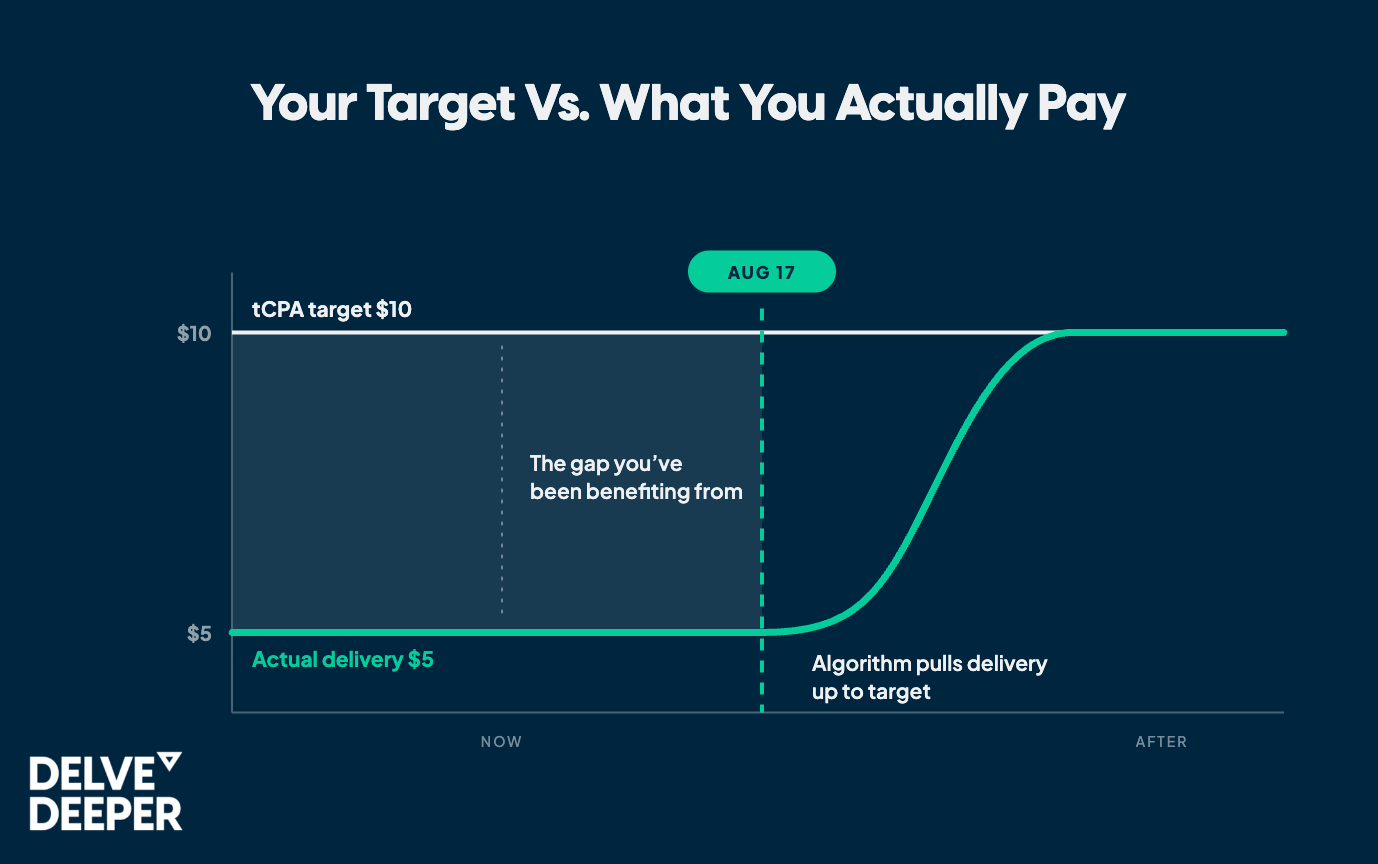
After August 17, the algorithm will optimize toward the target you set, not toward the best efficiency it can find independently. For campaigns where actual delivery is already close to the target, the adjustment will be minor. For campaigns where there is a meaningful gap, the shift will be noticeable.
The campaigns most at risk are the ones that have been running the longest and performing the best. The ones nobody has been worried about.
What to do before August 17
Pull your active Demand Gen line items and compare targets to actual delivery metrics for tCPA, tROAS, and tCPC. Wherever actual performance is significantly better than the target, update the target to reflect what the campaign is actually achieving.
If you are delivering at $5 on a $10 tCPA target, set the target to $5. That way the algorithm optimizes toward a number that reflects reality, not a conservative estimate from six months ago that nobody has touched since.
This is not a complicated fix. The reason it catches teams out is that well-performing campaigns rarely get audited. There are no alerts, no fires, no reason to open them. August 17 is the reason.
The larger shift worth understanding
This update is part of how Google has been gradually refining what targets mean across its bidding systems. The direction is consistent: targets are instructions, not suggestions. The platform is moving toward a model where what you set is what you get, which is good for budget predictability and planning accuracy.
The teams that will feel this least are the ones whose targets already reflect actual performance. The ones who will feel it most are the ones running on launch-day settings that were never meant to be permanent.
Check your Demand Gen line items this week. The gap between your targets and your actual metrics is the number that matters right now.
Get the must-read newsletter for digital fundraisers.
Written by Delve Deeper team members in the thick of the work, the newsletter explores practical solutions for challenges like disconnected data, weak segmentation, lack of personalization, and inefficient media.