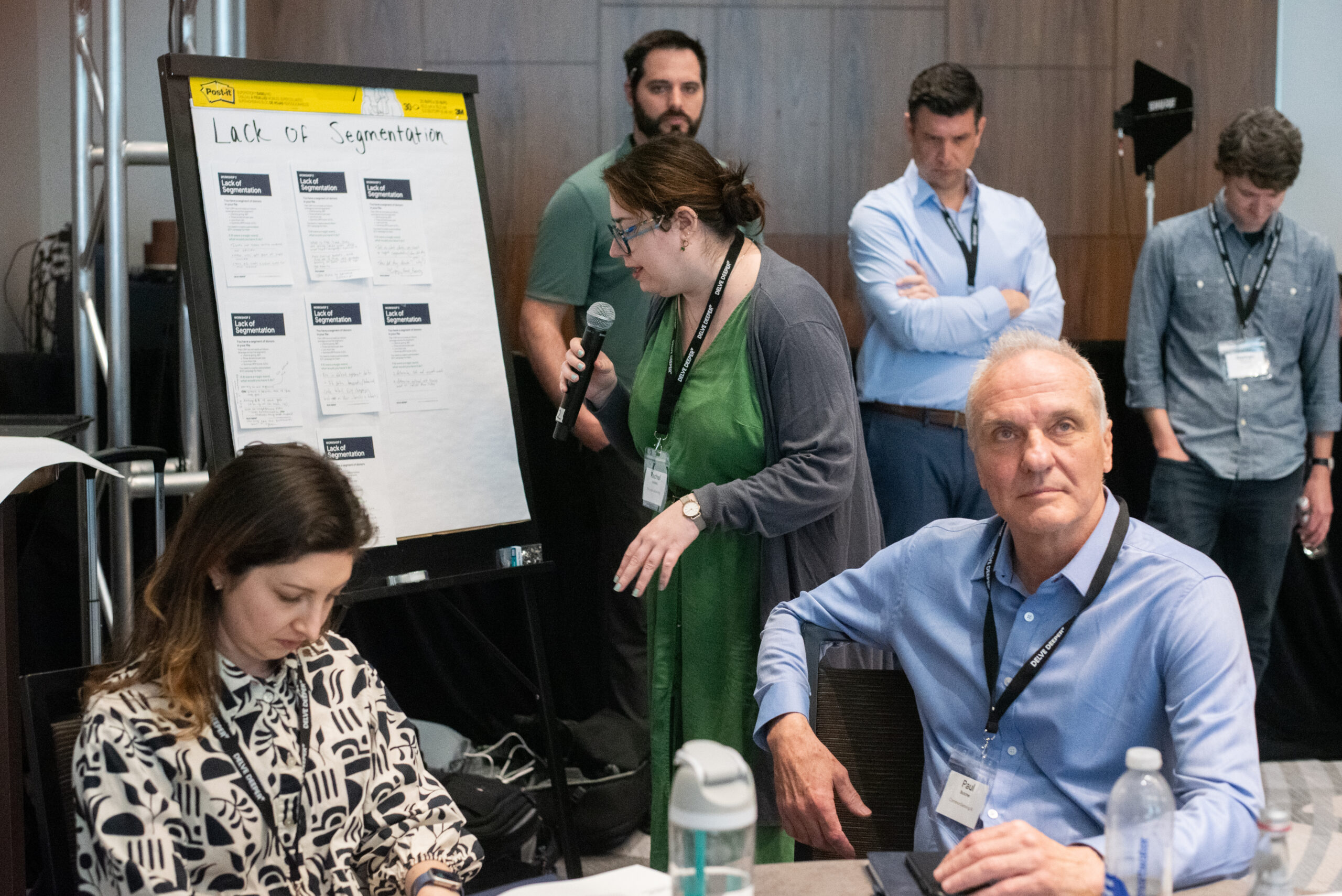
Lack of Segmentation Keeps Your Best Donors Invisible

The hardest donor to replace is the one who became a sustainer because something connected — a cause, a story, a moment that felt personal. And most segmentation strategies have no way to capture that.
The problem with nonprofit segmentation isn’t a lack of segments. It’s that the segments being used were built around what the database can do, not around the donor. Transaction data — such as RFM (Recency, Frequency, Monetary) — tells you what someone gave and when. It doesn’t tell you why. Which cause moved them. Which story connected. What they actually care about.
So organizations group donors by gift size, because that’s the field that exists. And those groups mean nothing to the people inside them.
What dollar-value segmentation misses
Sustainers don’t become sustainers because they were in the right dollar tier. They become sustainers because something connected — a cause, a story, a moment that felt personal. If your segments are built around transaction history instead of that connection, you can’t replicate it. And if you can’t replicate it, you can’t reliably produce new-to-file recurring donors at scale.
The donors with the highest capacity and deepest motivation often sit invisible inside a dollar-value model. Not because anyone is ignoring them, but because the data doesn’t reflect who they are.
“Sustainers don’t become sustainers because they were in the right dollar tier.”
Fewer segments, not more
The temptation when segmentation isn’t working is to build more of it. More tiers, more tags, more variables. But more segments without a clear activation process for each one is just more lists. It doesn’t produce more sustainers.
The answer is fewer, better segments — each paired with a clear next step. Most of the behavioral signal needed to get there already exists: what content someone engaged with, what campaign brought them in, what links they clicked. The starting point is using what’s already being collected differently, not collecting more.
One shared definition of a high-value recurring donor across every team. Segments built around motivation, not just transaction history. A workflow that connects each segment to a concrete action.
The org that segments by motivation instead of gift size will have lower lapse rates and stronger new-to-file sustainer acquisition than the one that doesn’t. That gap compounds every year.
Get the must-read newsletter for digital fundraisers.
Written by Delve Deeper team members in the thick of the work, the newsletter explores practical solutions for challenges like disconnected data, weak segmentation, lack of personalization, and inefficient media.