What 30 Years in Program Design Teaches You About Fundraising

Get one
powerful idea.
Subscribe on:


EPISODE SUMMARY
- Why do program teams and marketing teams end up working in silos?
- What does good impact storytelling actually look like — and why is data essential to it?
- How can nonprofits use both qualitative and quantitative evidence to build donor trust?
- What role can AI play in bridging the gap between programming and marketing data?
- Why should nonprofits compete less and collaborate more — and what would that look like in practice?
EPISODE TRANSCRIPT
Giving Growth Podcast – Kombo Choga (transcript)
Brought to you by Delve Deeper: https://delvedeeper.com/
Greg
There’s a problem that non-for-profits can’t ignore. The traditional giving permit seems to be slowly collapsing. The count of individual donors is declining, older donors are aging out, and younger generations are not filling the gap, and a volatile economy is squeezing non-profits from all sides.
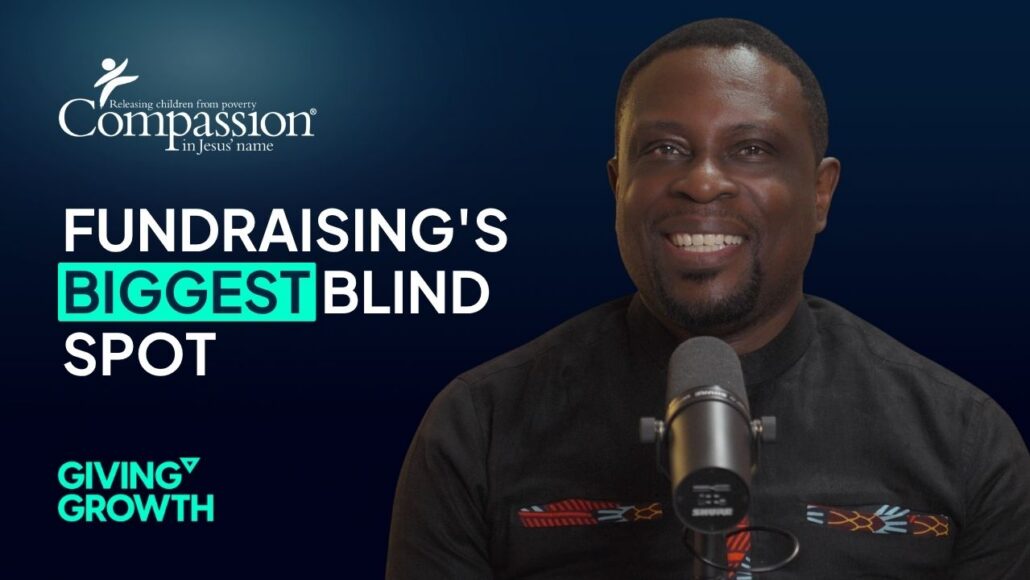
This is Giving Growth, the podcast where we talk to leaders who are reshaping the non-for-profit world and tackling these challenges head-on. Sign up for the Giving Growth newsletter and learn about one idea worth sitting with at delvedeeper.com slash podcast. My guest this week is Dr. Kombo Daniel Choga. And Kombo is a global development leader who is rooted in Zimbabwe, and he’s now bringing a unique dual lens of program design and marketing strategy to the non-for-profit world. Kombo is currently the Senior Director of Program Design and Quality at Compassion International. He has 20 years of experience at organizations like World Vision International, Save the Children, and now again Compassion International.
And Kombo’s focus is on bringing impact and communications at scale to humanitarian programs, from shaping how programs are conceived to how they’re told. Kombo focuses on how non-profit fundraising changes when you truly bring marketers and program teams together. Again, I’m so sorry I couldn’t be there with you in person.
Welcome to Giving Growth.
Kombo
No, thank you, Greg. It’s a pleasure and an honor to join you today, and I look forward to our discussion.
Greg
To start, I want to get into a little bit of your history, Kombo. You’ve designed and you’ve implemented programs for charities, and these are some of the world’s biggest charities, you know, UNICEF, World Vision. But you started your career as a research assistant for UNICEF Zimbabwe in 1995.
Talk to me about, was this always your career plan to be where you’re right now, or how did you get from where you were in 1995 to where you are today in 2025?
Kombo
Well, no, actually, that was not always my plan. As a young kid, I always was fascinated by planes, and I thought I would be a pilot. But I think over the years, I went through various evolutions of career ambitions, if you can put it that way.
And in the final year of university, out of the University of Zimbabwe, that’s where my life purpose really crystallized. And I remember writing down a personal mission that I would use my skills, knowledge, and experience to work with and for underprivileged communities, particularly children, so that they realize their God-given potential. Why?
I don’t know up to this day, but that was the genesis of my career as it is. And the time at UNICEF actually is a temporary role as a research assistant, but it ignited a passion of how we could use data to inform systemic changes that could help us alleviate poverty.
Greg
Was there one, maybe, experience over what is right now 30 years that’s been most impactful, most memorable, that really speaks to your interest in better collaboration between program design and marketing teams? Because I remember when we met originally, it’s unique for someone to be so passionate about program design and how it’s then communicated. Why is this so important to you?
Did something happen in your past that really made you pay attention to this area?
Kombo
Part of it is my own personal experience. I was born in what would be considered a resource-poor community out in the east of Zimbabwe, in Bohaira, but yet it’s a community that is rich in faith, rich in ideas, and I grew up in a radically different context, mostly in Australia, out in Perth, Western Australia, but also have lived in a total of around the world. So, I have always had this passion of bridging the world I was born in and the world that I’ve lived in for most of my life.
So, I think there was that personal experience that led me down this path.
Greg
That makes sense. And, really, over all these years that you’ve been in industry, I’m sure you’ve seen much change. What has really worked, you know, 20, 30 years ago versus maybe it doesn’t work anymore today or something else has to work today, what’s been the biggest shift that you’ve seen and then how is that shaping your point of view or what you pay attention to today?
Sure.
Kombo
I think there are a couple of big changes, but I think the one that most resonates is the use of data within the sector. You know, the advent of big data and the ability to process it better, to inform leadership decisions and program level actions, I think provides a unique opportunity in which, you know, nonprofits like the ones that I’ve served in can actually leverage that better, make decisions on both sides, programming and marketing and how they interrelate. So, I think that whole data revolution is one major thing.
I also think, you know, to speak to something you mentioned in the beginning, the reality of a dwindling resource base is really forcing innovation within the space in terms of how it is that we acquire new donors and sponsors, how do we retain them, and also how is it that we leverage the voice of those that we seek to serve. So, I think there have been trends in that respect, just to mention a few, that are forcing us to innovate within the nonprofit sector.
Greg
When you say we’re forced to innovate and data is the big shift in terms of what has changed, you are right now a senior program director at Compassion International. How is data changing how you think about your role right now? Can you share any examples or just perspective on, you know, how data is changing kind of what you do day to day right now versus maybe years ago?
Kombo
Right. I think one interesting thing, which sort of speaks to the middle space that I’ve fueled for most of my career between programming and marketing, is really it forces you to think of things holistically, right? If you look on the programming end, you need to be crystal clear around what are the demonstrable quantitative changes that are happening in those lives of the people that you’re serving, what are the qualitative experiences that they’re having, how do you leverage their voice in speaking into what this data is telling us, but also how does it connect with those that are funding the work that we do? How do you demonstrate impact and communicate impact that they are investing their dollars into? So I think this really forces us to, and in a good way when I say forces us to, it really forces us to think through an end-to-end view of how we understand data, how we leverage data, how we are able to communicate impact from field, translate it into marketing, understandable language, and language that’s consumable by both our current sponsors so that we retain them and future sponsors so that we acquire them.
Greg
Can you give me an example of a program of this sort of happy marriage between programming and marketing that you’ve seen lately? And maybe there is a data store in there somewhere as well. What comes to mind?
Kombo
Yeah, maybe in sort of my immediate past history serving with World Vision International, one of the things is there was a global initiative undertaken within the context of World Vision to really look at how is it that, you know, at the squeeze that all non-profits were feeling during the COVID era, right? How is it that you could look at one, being able to demonstrate impact of the work that we are doing on the field, and being able to package it in ways that are appropriate for consumption of our current sponsors? So let me give an example.
I think traditionally a lot of the child sponsorship organizations, which is the space that I’ve worked in mostly, you know, we’re used to analog information, letters, cards, and so forth flowing from child to sponsors. And yet there was an opportunity to look at digital first as an example. And it being more appropriate as you look at the evolution of sponsors, from being an older generation to the younger generation, who are used to more instantaneous information sharing.
So I think that’s just one way that I can immediately think of how we leveraged it in that context, took a digital first approach, and were able to meet the changing dynamics of who our sponsors were, how they preferred to communicate, and how we could make that, you know, connection, cut out the noise between the connection of what’s happening at the programmatic level and what they would like to see and consume. And be able to answer fundamental questions that all funders would have.
One, are these participants real? Am I giving money for existing participants? Two, is my money making a difference, right? Can I actually demonstrate that my money is making a difference? So yeah, that’s one example. And it has positive implications in the context of that initiative that World Vision was seeking to drive in terms of leveraging, you know, technology to go digital first in terms of interaction between sponsors and the children that they sponsor.
And then maybe one final example in that respect, Greg, is I think when I look at Compassion International right now, I think by and large, one of the secret sauces for the organization being able to survive what are turbulent and challenging financial season within the nonprofit sector is that focus on bridging the gap between what’s happening at the programmatic level and what’s happening or what’s needed on the marketing end.
Greg
And I wonder, those examples that you shared, and you talk about the use of data, is the use of data specifically in the context of, for example, explaining impact? So being able to quantify impact, or is there a different context where you believe that the use of data can be an enabler of helping programming and marketing kind of work together?
Kombo
Sure, sure. I think if you look at it, a lot of traditional communications to funders, sponsors, and donors tended to be anecdotal stories, right? Which is not a bad thing.
But I think imagine how much more powerful when these anecdotal stories are supported by evidence of impact, right? Are supported by clear quantitative data that shows shifts in the matrices that we are seeking to pursue in our development programs. That becomes richer, that breeds greater, you know, full of evidence that’s demonstrable, in addition to sort of the qualitative anecdotal storytelling that may come from, and ideally that should come from the voices of those that are actually our target beneficiaries.
So I think that’s one key contributor of data in the marketing space, but that’s data that’s originated at the programmatic end, hence the marriage between programming and marketing.
Greg
And you spoke to me last time we connected about that connection between programming and marketing being strengthened by better storytelling. And what I wonder is if whether what you’re saying is that, and I’m not trying to put words in your mouth, I’m trying to understand this because, you know, I am on the kind of digital fundraising side. And from a communications perspective, the more stories I have, the more, whether it’s anecdotes, but also to your point, true examples of like quantifiable impact that I can share in advertising and in marketing, the easier it is for me to raise money.
And my judgment is that the industry struggles with telling relatable stories that maybe sometimes the impact is too abstract and maybe sometimes it’s too specific, but it’s in some way not quantifiable enough. And I think people won’t, they don’t just trust charities nowadays that whoever is the charity, that the charity will do the right thing. We know the charities will do the right thing, but I don’t know that donors do.
And I wonder if your point about better storytelling, using data to communicate impact is something that charities need to do more of, and they’re not doing a good job of explaining impact using data today. What are you hearing?
Kombo
Yeah, I think here’s the challenge, right? We are in a, if I can term it a business that is funded by voluntary giving, and in that space, there’s issues around trust. And I think you alluded to that in your comment there.
There’s issues around trust. How is it that we build trust? How do we strengthen our reputation within the world of voluntary giving?
So I think there are a number of things that we could leverage data to do with. Yes, we must be clear that we hear the voices of those that are being served, that hence the qualitative element, the qualitative evidence in terms of hearing what those that are experiencing the work that we are doing are saying about it, and how it is shifting the development discourse and action within their communities. But also we must be able to quantify what that looks like, right?
So I think there’s a space for that qualitative, that narrative from those that are experiencing the work that we’re trying to do, but also then the need to complement that with robust monitoring, evaluation, research and learning, analytics and data that provide evidence that actually there is a shift, you know, programmatically and towards the outcomes, development outcomes that we’re seeking. So I think there must be a deliberate focus on mixed method storytelling, if I can put it that way, where we do have qualitative data, preferably in the voice of those experiencing, but also robust quantitative data that is based on, you know, our monitoring, evaluation, research and learning practices.
Greg
I think this very elegantly speaks to, again, this point that you have that programming and marketing can really lead to breakthroughs in experience. And that’s something you spoke to me about. And, you know, I wonder, why is it that programming and marketing aren’t working closer together?
And of course, there’s silos. Of course, you know, I’m in programming, program development, and logistics, you know, there’s just lots goes on that alone. And maybe what’s happening is that I don’t have the headspace to actually think about how am I going to tell these stories?
And then marketing is also disconnected from programming. How often does marketing actually talk to programming? And I really ask, like, what’s really going on?
How do I really tell the story better? So I’m curious about, first, why is it that this is even a thing that you feel so strongly about? Why is it that programming and marketing aren’t working closer together?
And then in your experience, again, you talked about breakthroughs, fundraising breakthroughs. If there is collaboration, what are some of the fundraising breakthroughs that collaboration between marketing and programming can open up?
Kombo
No, I think that’s a great question, Greg. Here’s the thing. If you sort of look at perhaps the traditional approach, and part of it may be what you alluded to there in terms of just the headspace to process through the noise, right?
Where there is perfectly good intention in those that are doing development programming and those that are doing marketing to do the best that they can. But how much headspace and ability to process data and information is there? Which is, you know, would lead me down to another topic in terms of how do we ethically leverage artificial intelligence in this space, for example.
But I think one is just that ability to process the amount of information that’s coming towards those on the programming side and those on the marketing side. But I think here’s the thing. If you look at it, one thing that is almost, I would say, true across the non-for-profits sector is a very strong mission focus.
For example, we in Compassion, our mission is to release children from poverty in Jesus’ name, right? And that’s a mission for all of us in programming, in marketing. So I think the focus on what matters across both programming and marketing space is one thing that can help us to cut through that noise and say, one, what’s our mission focus?
Number two, the ability to be strongly focused on who is our intended target population. For us in Compassion, it is children. Whether in marketing or in programming.
And then to be very deliberate around who is funding us. Who’s our sponsor? Who’s our donor?
What do they need? So I think the ability to navigate data around this issue of what drives our combined mission, what is it that should address the development outcomes for children who are our primary beneficiaries or target audience is compassion. And what is it that those that support us financially need to be able to have the confidence in the work that we are doing.
And so the data analytics around that, which is where I think reflecting on the issue of better leveraging artificial intelligence, aligned to mission and within the context of our values, may provide an opportunity for us to be able to process better, to be able to collaborate better, and have greater synergies across what were traditionally silos. So that traditional model of planning, acting, and processing in silos does not serve us well.
Greg
You know, I almost wonder, like, look, I hear everything you say. And the one piece that really resonates with me is around, and this is a belief of mine, and I wonder what the reaction is. I have this belief that what really is unique about charities versus, let’s say, some of the brands I used to work with, which are for profit, or clients I have today who may be for profit, is that if I’m a for profit brand like Nike, I have just one constituent, that’s the customer, the dog, the person who is actually wearing the shoes.
So it’s kind of easier for me to focus on be obsessed about that. But if I am, let’s say, Compassion International, and I want to help children in Jesus’ name, but then I also have donors. And I almost feel like having the mission and the donor as someone who, where the programming, I imagine, is worried more about the mission and the client that I’m serving, which is, in this case, children.
Marketing is thinking about the donor. And is the disconnect between marketing and programming driven partially by the fact that programming is about mission, marketing is about the donor, and that’s really, besides silos, right, and different KPIs, is that driving the disconnect? I guess, again, I’m just like, I know I’m sharing, it’s a leading question, it’s a judgment, but I haven’t had anyone on the show, Kombo, who actually isn’t programming, which is why I’m asking you.
Right.
Kombo
Now, here’s the interesting thing. I think you point out a very real challenge, Greg. But when you take a step back and say, wow, programming, marketing, within Compassion, all is focused on, ultimately, the same mission, the same set of development outcomes for children.
What we get our sponsors to support is, ultimately, the same of what our children and families, communities, the churches that we work with across the countries that we serve are seeking. So, I think, what’s that common, high-level, common denominator? And how do we capture it in ways that speak to the two audiences?
So, you are right, I think, in the for-profit world, it is perhaps much clear-cut. It’s who wears the Nike shoes, right? And to that extent, you are very right, it’s perhaps easier to focus on.
So, I think what we need to do in our context is to say, hey, what is it that unites that sponsor? Why do they make a choice to sponsor a child and support the program that Compassion has? What’s the common denominator?
What is it that the children, the frontline churches that we work with, the communities that we work with, what are they seeking? Ultimately, I think it’s the same thing. It’s these positive development outcomes for children.
And so, I think that’s where we, at a strategic level, that’s where we need to start. And then say, hey, how does marketing play a role? You know, I honestly believe, to quote a former colleague of mine, that programming and marketing are two sides of the same coin, right?
One cannot do without the other. And for us to deliver on mission, for us to deliver on our strategic objectives, they need to better talk to each other, plan with each other. Sort of this siloed, old-style approach is not working.
It is broken. And I think the best way we can look at it is what’s that higher-level mission and strategic outcomes that both are seeking to contribute to.
Greg
You know, when you were speaking, I remembered this fable, or it’s a real example from Amazon, where supposedly, I forget what is the exact name of this approach, but before launching any large initiative, and this is specifically in the context of Amazon Web Services, you know, years ago, the team at Amazon created a number of fake press releases that they would have wanted to release in a year or two, but already imagining how they would communicate the benefits of Amazon Web Services, or AWS, to the general public.
So they started with the communication in mind first, and maybe programming and marketing would work better together if they got together and created a one-page press release about this specific program that marketing can align with, that these are the benefits that donors care to hear about, or sponsors care to hear about. And if then programming said, and this is what we will deliver, maybe that is one tactical step that’s missing that could make everyone work closer together.
What do you think? What would you do? What would you tell a programming person and a marketing person who want to work closer together about something that you’ve seen work that they could implement tomorrow?
Kombo
Well, I think that’s a great example, Greg. I mean, if you think about it, what, you know, if I were to replay what you’re saying, which I think, you know, makes sense, is you’re saying, let’s be clear around what’s that north star, i.e., what is it that AWS wants to deliver in X, you know, X years, right? And be clear about it now.
I think what that helps is if programs and marketing were clear around that north star, right? It then allows us to be clear around what are the complementary roles that need to be played in order to drive towards that note star, right? So, I completely agree.
I think there is need in this space to be clear around our combined north star and then to be clear around our contributory roles towards driving for that note star. So, you know, I do love that example.
Greg
I want to shift gears because we talk about, you know, programming and marketing working together. And I wonder if that’s very much about donor acquisition. But retention is a big thing that we all care about as well, right?
It’s expensive to acquire donors. It often takes months to get payback, especially if we’re talking about, you know, mass donors who donate up to a thousand per year or maybe 20 bucks a month. What, in your opinion, is the biggest mistake that you see nonprofits make when it comes to keeping donors engaged?
Kombo
Right, right. Yeah, no, and I think maybe just to underscore something that you said in there, I think, look, retention is critical in that it does cost, you know, sometimes up to 5x more to acquire a new donor. So, it is better for us to ensure we retain those that come through the door. But, you know, that’s still one leg of a two-legged thing, if I can put it that way, where we still do need to ensure that there are those coming in through the door, right?
So, acquisition also becomes critically important. So, I think, for me, when you look at that dynamic and what are perhaps some of the mistakes, to respond to your question here, is an overfocus on one versus the other. That’s one thing.
How do we ensure we are driving both retention of those that we have and acquisitions that we need? And to do that, I think, like I was saying earlier on, in a world of voluntary giving, there are certain things that we do need to do that ensure we are very specific around what it is that we seek to deliver, how we deliver it, and what it is that your resources are supporting us to do, right? So, I think that will help us to ensure, you know, specificness drives credibility of the work that we’re doing.
You know, it drives our reputation if we can demonstrate in very specific qualitative and quantitative terms that are understandable and consumable by our supporters. So, I think these are some of the challenges and perhaps pitfalls that nonprofits need to be addressing to ensure that there is, you know, adequate retention even as we focus on acquisition.
Greg
And I want to move on to a different topic, the fact that you have had such an amazing experience over your career. You have lived in seven countries across three continents. You worked in global roles, you know, touching over 100 countries, which is so impressive.
What do you see as differences in how organizations approach fundraising and impact storing globally versus, for example, in the U.S.? What have you seen work across all these geographies in which you’ve been so active?
Kombo
I think one clear-cut distinction, if I look at different, you know, contexts, is how we process, you know, data and how it is leveraged to actually inform leadership decisions and programmatic and marketing-related actions. I think this varies pretty significantly in different contexts. And yet, I think, in many ways, data is the new oil, right?
If you think about it, our ability to process data, to be able to inform these leadership decisions and programmatic and marketing actions is significant. So if I were to look at one particular area, because I think it would be just around data analytics and application and how we can do better in that, in all contexts that we operate. So I think when I look at, you know, some of our more local, smaller to mid-size non-profits, there is, you know, maybe part of it is a resourcing question, insufficient investment in that area of data analytics and ability to digest that data and say, so what does this mean for the decisions that leadership are taking and doing it in a timely manner?
Sometimes they do leverage data, but it is outdated data, which in the business of really human transformation, which is what we are in, it can be a question of life or death, depending on what type of data you’re processing, right? So if you get health statistics three months late, nutrition statistics three months late, and more is secondary data, how useful is that? So I think one particular area of emphasis I would say, Greg, is really the ability to process data, the ability to leverage it for leadership decisions and to inform both programmatic and marketing actions.
Greg
Well, and that resonates, right? I think that that wraps up everything we’ve been discussing till now, because what I’m hearing you say is that if the North Star is the impact that my mission has on those in need, then programming and marketing can align towards the North Star and that’s the optimal outcome.
But if I don’t think about, again, not anecdotes, but the full impact story that I can tell about this program in marketing, then no wonder that maybe donors are confused about why should I give to this charity versus support someone who is raising money on Facebook for their family, or maybe a GoFundMe campaign, right, which is happening right now, and that’s siphoning some funds away from charities.
So I’ll tell you, I’ve been in digital marketing, digital fundraising since 1999, and it’s a really fascinating combo to see how the same challenges, the same issues that I saw 25 years ago, they’re still relevant today. Like we talk about innovation, we talk about AI, right?
And yet, you’re saying at the end of the day, if you don’t have the right data to explain the impact of the program and communicate the impact in marketing, it just doesn’t work. So that’s more of a reflection, you know, I don’t know if you have a comment, but it’s funny how these topics kind of, they don’t go away Kombo, you know?
Kombo
Greg, if I may, I think one of the things that poses sort of picking up on your reflection there, right, is even imagine even if we’re in a world where we had solid marketing analytics, solid programming analytics, and yet we’re not pulling that data to ask the question, so what, right? And to end, I think if we continued even the siloing of the data that we’re getting and not interpreting it holistically, then this would still remain a challenge. We would have solid marketing data and analytics, solid programmatic data and analytics, but we’re not pulling it together and asking the so what questions for driving towards our mission, driving towards our strategic outcomes.
So I think it’s ensuring we have solid programmatic and marketing data, but crucial that we are pulling it together, crucial that we’re asking the so what questions for driving towards our strategic objectives and further on to pursuing our mission.
Greg
That makes sense. And I want to shift gears for a second to a topic that you alluded to earlier, which is innovation. And when I talk to charities about innovation, the challenge that I have is that it’s hard to know where to get started.
And I wonder first, what is your experience with like AI in the context of innovation, like over the last couple of years? And do you see charities embrace AI in specific use cases, or do you think that we all want to do the right thing and we want to lean into AI more? But it’s really hard to know how to do it, where to get started, because we’re all just getting started.
Kombo
Right, right. Yeah, no, I think that AI is an area where I think within the non-profit sector, we are still grappling with the implications and asking you some questions around, hey, what does this mean in relating to our mission? What does this mean relating to our values and so forth? But I think in my assessment, I think it is important, yes, that we must ask those mission related questions.
Yes, we must ask those value related questions, but simultaneously ask what does it mean in terms of the opportunity cost, right, of not appropriately tapping into what AI can do. Now, let me give some examples. I believe, depending on the life stage or size, et cetera, of a non-profit, how we may leverage AI may differ.
I’m thinking of, you know, small, mid-size organization. Sometimes the biggest thing they can do is just to enhance efficiencies in how they do certain administrative tasks. And that may be crucial in a state where there’s shrinking giving.
I mean, what’s happened within sort of government funding, contracting, not only here in the U.S., I mean, realistically, that’s global. As more and more governments move into defense spending and so forth, the softest target is what has been going to international development and humanitarian work. So in some cases, it may be just how do we leverage it for efficiencies, basic efficiencies, and ensuring that way we have reduced budgets, we are investing it where human touch and action is most needed, and automating certain things that could be automated.
In other spaces where perhaps the thinking is more around what I was talking to earlier on is, hey, we do have data, information, you know, in siloed ways across our marketing organization, across our programming organization. How do we pull and analyze it in a more holistic way that speaks and helps us to drive towards our strategic outcomes and to drive towards mission? So I think right-sizing our AI ambitions perhaps is one way I would say, and ensuring most crucially that it is mission-aligned, value-informed decisions that we’re taking around how we leverage AI within the nonprofit sector is crucially important.
Greg
I have a question about how you see the future Kombo. Because when I look at the count of donors, if you look at in the U.S., right, the count of donors continues to go down. Thankfully, donations actually continue to increase, revenue continues to increase, but it’s only because rich are giving more.
And I think that the data that we see in terms of donors going down, donations going up, is kind of reflecting this trend. That’s obviously a threat. But from where you stand, from where you are at Compassion International, what is a trend that you think about in the future that you think is an opportunity or a threat that the industry should be paying attention to?
Kombo
I think, Greg, one of the things that are going to be important, maybe let me take a step back and then address your question, right? If I look at the area in which compassion works in, right, that of focusing on children, leveraging child sponsorship, and so forth, and if I look at the global statistics around children in poverty, right, wow. Okay, if we look at the ultra poor, the children that are considered ultra poor, maybe around 333 million.
If you look at those that are considered poor, nearly 1.5 billion. If we look at combined the world’s largest child sponsorship organization, how many of those children are we actually touching? Less than 1%, right?
And so one of the things that I keep, you know, when I look into the future is how can we compete less, collaborate more, to tackle what is obviously a massive program, right? I mean, every organization has a reason to want to survive, to drive for its mission, but ultimately if our intent is all around how do we make a dent for that 1.5 billion children considered to be in poverty, right? You know, living on less than $6.85 a day, or ultra poor, which is even less a day, I think $2.15 a day. How do we work differently in ways that we play to our different organizational strengths, but doing it in a way that is collaborative in order to make a dent in such staggering childhood poverty rates? So I think that’s going to demand us to think a little bit differently around collaboration. Think a little bit differently on what competition in the sector looks like, and how we can actually be, you know, working in synergistic ways to make a dent on this issue of childhood poverty.
Greg
I wonder if what you’re alluding to, and you don’t need to respond to this, and it’s easier for me because I don’t work for a charity, but, you know, is there an opportunity for charities to hold hands and join forces better? I also, the many people I speak to also talk about deeper, private, kind of not-for-profit collaboration. So, look, I wish, to your point, when you say 1% of the world’s children, Compassionate International can actually help, that depresses me, because what happens to the 99%, right, that we can’t help?
And what is more important? So anyway, I’ll have a reaction. I know what you mean.
I guess I have a final question for you. So you’ve been doing this for 30 years. What do you wish that you knew about program building today that you wish you had known when you were starting your career?
Kombo
Wow. I guess a lot. That I, you know, I guess.
What comes to mind? That I still may not know. But I think a couple of things that perhaps I now know that I didn’t know.
I think one is clarity and continued focus on mission is crucial. Two is the need to be laser focused on who that intended beneficiary or participant is that you are seeking to target. And three, to be very cognizant and anticipatory of the needs of those that are funding this.
And in the mix of these three things around mission, around our target audience, and around who those that are supporting us, I think being sure then to ensure that I think simplicity is king, right? This can be, poverty is a highly complex issue. But developing complex responses to a complex issue may not necessarily be the best thing.
So I’ve learned to always try and shoot for simplification, try and simplify how we explain things, how we do things in ways that are easy to communicate.
Greg
That’s not easy. I mean, I, I’m there with you. I think that a superpower is to be able to look at the, at the complexity, especially when it comes to messaging and, and, you know, come up with that one key takeaway that you need someone to remember.
And then to your point, that’s hard. That’s really hard.
Kombo
Yeah. Yeah. I think maybe one, one, one, one reflection, additional reflection is when you think of, of the nature of work that we do, right?
As Compassion International, we work with a network of 10,700 churches globally. Now sustainability of the work that we do depends on ability for them to translate that and to sustain that beyond compassion’s existence within their communities. So this is where the simplicity question for me comes in.
To what extent do we work with them in ways that build their capacity to be able to sustain that work, to be able to adapt, right, around continuing to serve children and continuing to tackle issues of poverty beyond compassion’s physical presence, beyond compassion’s continued resourcing of those, how can this be sustainable? So I think, you know, from a compassion perspective, our superpower is that focus also on, on, on working with these local institutions, the church, which in those contexts that we operate are often quite a respected institution, equipping them, assuring that they are enhanced in terms of their capabilities to, to respond and to sustain and even to evolve and change the work as is appropriate for their communities. So I think, you know, in some ways that’s compassion’s superpower, the working with and through churches as a local institution that will outlast our existence within any area that we work in.
Greg
Well, Dr. Kombo Daniel Choga, Senior Director, Program Design and Quality at Compassion International. Kombo, thank you so much for your time. Sorry again that we didn’t get to do this in person, but I really enjoyed your point of view on how programming and marketing can come together.
Again, it’s fascinating that this is something that makes sense, that these two sides of the same coin should be connected. And yet the opportunity to foreclose your collaboration is bigger than ever. So thank you so much for sharing your point of view.
Kombo
Thank you, Greg. I think this was a thought-provoking discussion for me and literally energizes me for the next phase of what it is that we need to do. Keep doing what you’re doing.
I’ve listened a great deal to the previous episodes of the podcast, and I think this is critical work that you’re doing. Thank you very much. Well, you’re very kind, sir.
Greg
Thank you very much. And take care. Take care.
Kombo
Thank you.