Untangling Non-profit Data Chaos: Save the Children’s Marketing Approach

Get one
powerful idea.
Subscribe on:


EPISODE SUMMARY
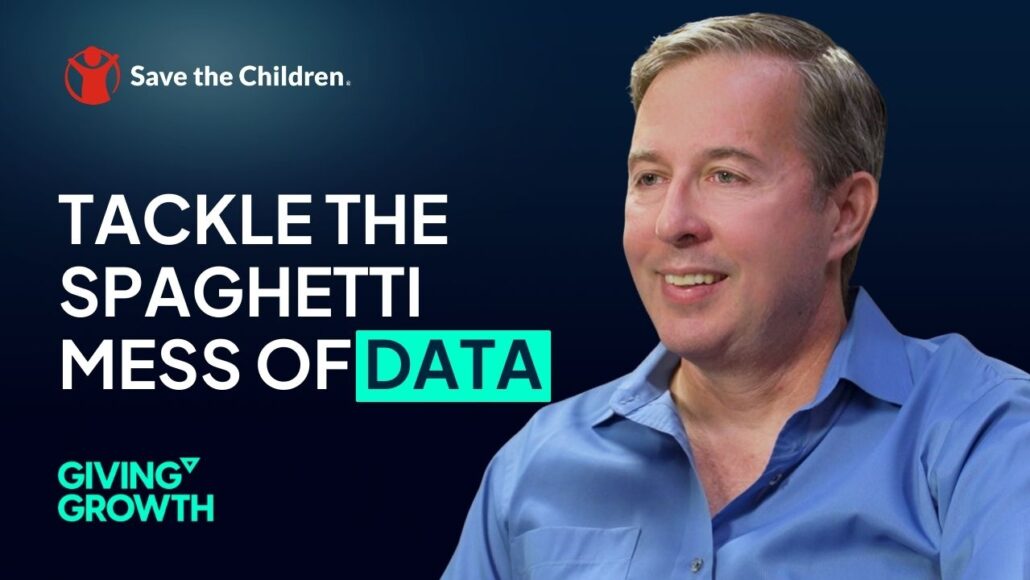
Jon Wheeler, Senior Director of Direct Marketing at Save the Children US, joins Greg Sobiech for a deep dive into one of the sector’s biggest challenges: how nonprofits cut through overwhelming noise and deliver messages donors actually care about.
Jon has spent his career at the intersection of digital marketing, data, and donor experience. In this episode, he breaks down how charities can move from siloed channels and spaghetti-like tech stacks to something far more powerful: a true omni-channel, donor-centric system that gets the right message to the right person at the right time.
In this episode:
- Why donors tune out, and how to break through
- How nonprofits can escape siloed channels and think like a “symphony”
- The real reason personalization is so “maddeningly hard”
- How AI might finally help isolate signal from noise
- Why data hygiene still matters in 2025
- The big opportunity (and threat) in today’s giving environment
EPISODE TRANSCRIPT
Giving Growth Podcast – Jon Wheeler (full transcript)
Brought to you by Delve Deeper: https://delvedeeper.com/
Greg Sobiech
There is a problem that not-for-profits can’t ignore. The giving permit is under threat. This is yet another year when the count of donors per GivingUSA is declining.
Older donors are aging out and younger generations aren’t filling the gap. And the volatile economy is squeezing non-profits from all sides. This is Giving Growth, the podcast where we talk to leaders who are reshaping the not-for-profit world and tackling these challenges head-on.
Sign up for the Giving Growth newsletter and learn about one idea worth sitting with by going to DelveDeeper.com/podcast. My guest this week is Jon Wheeler. He is the Senior Director of Direct Marketing at Save the Children US.
Jon is a creative, result-driven marketing leader with deep expertise in marketing technology, email and SMS fundraising, and building ad tech and marketing systems with donor at the center. He cares to scale impact for mission-driven organizations. Jon helped non-profits from small grassroots groups to global leaders like Save the Children US to use digital platforms in order to engage supporters, grow revenue, and respond quickly when the world’s most valuable children need it most.
His superpower is organizing donor journeys, testing new channels, and blending data with storytelling, ultimately using digital innovation to drive impact for children and families in need. Jon, welcome to Giving Growth. Thank you, Greg.
It’s really, really exciting to be here. I wonder about the most formative moment in your career. Is there a moment that stands out that would help me and the audience understand who you are today?
Sure.
Jon Wheeler
So, I always like to talk, sort of begin my story talking about how I kind of found my way into sort of working with technology for the greater good by one of my first jobs, which was straight out of college working on Capitol Hill for a congressman. This was in the mid-’90s, and I was the computer systems manager managing their internal database. So, all the messages are coming in from the constituents.
At that point, it was phone calls, it was letters, it was faxes. I was fresh out of college and now running the systems, and nobody had an email address. I was the first one to get an email address.
I remember going around to my co-workers in the office and I was like, hey, look, everybody, we can now have an email address. People can send us messages. Isn’t that going to be great?
And nobody wanted one. They were like, are you kidding me? This is the last thing I want.
It’s another way for people to get in touch with me. I already have people coming in, stopping by, trying to meet with me, phone calls, faxes. It’s too much.
Think back about that world where we didn’t have this sort of getting inundated with messages all the time. So, I think a lot of that shaped me in thinking about how do you break through that noise? How do you make your message for a nonprofit more relevant so that it actually really resonates with people?
And I think part of what I imagine we’ll be talking about is that personalization. How do you use information that you gather from your donors, from the people who are interested in your cause, to really break through and show them that I know who you are, I know what you care about, and here’s what we do as an organization that taps into that. So, that’s one point.
The other point that later at Save the Children, one of the biggest moments was in 2022 when Russia invaded Ukraine. I was actually on vacation. It seemed like this was a pattern with me.
Every time I would go on a vacation, and I was managing the email program at the time, every time I would go on vacation, that’s when a crisis would hit. So, first, I was on vacation, and, you know, hurricanes, earthquakes, back-to-back.
But then we were down, I was on a vacation with my family in February, and I told my wife, like, I am not going to have to work on this vacation, I promise, unless Russia invades Ukraine. And sure enough, what happens?
So, I’m there. I’m at the, you know, side of the pool, approving messages, approving emails. And it was one of, you know, it’s terrible to think about some of the best times working for an organization like Save the Children is when some of the worst things are happening to children around the world. But in those moments where there’s a crisis, Save the Children and other, you know, other charities do our best work because we are able to really tap into that, you know, moment where it is so clear that what is needed is to help children who are suffering in this moment.
And we responded so fast. You know, we were first in market in getting those messages out. And the imagery that was coming out at that time was just like, you could not have sort of asked for more compelling images of how children were being impacted by this crisis.
I still remember seeing these scenes of train platforms in Ukraine just littered with empty strollers because the mothers had brought their kids down to the trains, got on, left for Romania, left for Poland. And, you know, it was really clear. And we were there.
Save the Children was there at the border to greet them, to welcome them. So, it was one of these moments where it was just so clear that we are, we’re here, we’re meeting the moment and we’re delivering what people need. So, that we were able to do incredibly well.
We saw huge performance. We saw huge growth. What was challenging and what I think we’re still working on cracking, and a lot of organizations are working on cracking, is what happens next.
We got all these donors through the door and we put together a tiger team. We really worked on figuring out how do we keep them? How do we retain them?
To tell you the truth, it was challenging. We just, you know, it’s that people come, they care about this thing, and then they don’t necessarily feel that the messaging that’s coming back to them really resonates with that original reason they came through the door. So, that’s a lot of what is motivating me now.
How do you continue that real, like, compelling message over time throughout that life cycle with the donor so they really feel like this is an organization that I want to continue being a part of?
Greg Sobiech
Using those two different examples, your experience with your colleagues not wanting to use email because they’re already overwhelmed. Yeah. And that’s on one hand.
We are overwhelmed today. We were overwhelmed, you know, 20, 30 years ago. Yeah.
We were probably overwhelmed a hundred years ago when telephone was introduced and probably whoever wanted to have their telephone installed in their house back then also felt like it would be too easy to get in touch with me. Absolutely. And then your example with Ukraine and other emergencies, to me, that speaks of the fact that when there is something terrible that’s happening, the message does get through to us.
It’s terrible when emergencies happen. It also helps to raise us raise money and we shouldn’t count on it and we don’t want it.
So, how do we break through? And I think this is the theme for this conversation. How do we break through when everyone is so overwhelmed with so many messages and when we don’t want to count on emergencies?
And I think what is really interesting about you, and we spoke about this over breakfast, is that you bring in this wonderful mix of digital marketing as a Senior Director of Digital Marketing. You’re very unique, in my opinion, because you have this deep passion and understanding of Adtech, Martech, and Data. So, I want to talk about first, what do you see as big shifts when you step back and you look at your career in digital marketing, specifically in the context of charities?
What are the bigger shifts that you’re seeing that maybe weren’t there when you started and it’s something that was really bubbling up as a topic today? Yeah.
Jon Wheeler
I think the biggest buzzword and the biggest concept is this idea of, call it omni-channel marketing or integrated channel marketing, with the idea that all of the messages that you should be receiving from an organization, they make sense together. They flow as part of a cohesive whole and it’s what people are used to from when they’re getting marketed to by businesses. They go into a store, they’re seeing the same type of marketing in the store as they’re seeing in digital ads, as they’re seeing in their emails, as they’re seeing in other places.
I think the way that we have built our marketing channels in non-profit organizations, and in particular for larger enterprise organizations, is they’ve kind of gotten added one by one. The way that organizations are set up in marketing departments is you have these channel owners who are very driven by performance of their particular channel, or you’ve got product owners, you’ve got sort of owners of different stages of the supporter life cycle, whether it’s acquisition, retention, mid-level, that are really driven by, I’ve got my specific goals and my role is to really maximize performance on my channel or for my program. That sort of doesn’t really speak to what the donor’s experience is going to be. They want to feel like they’re contributing to a mission.
They are doing something that makes them feel like they’ve created something better in the world for something that they care about. When we market to them just looking at, how am I going to maximize email performance? How am I going to maximize click-through rate?
We’re not thinking about, and how am I going to show that I’ve brought in more revenue for my channel? We’re not thinking about how does this all come together from a donor perspective where it’s not important to them how they connect. What’s important is that they do connect.
That’s the fundamental shift that we’re trying to make. It’s hard from both a strategic and an operational perspective, and then it’s incredibly hard, from where I sit, from a data and technology perspective. I recently built this visual map of all of our channels, all of our platforms, all of our data sources, and all of our reporting tools.
I tried to look at how all this stuff comes together and where the information is flowing. It was such a complicated spaghetti mess. The work that it takes to actually simplify that is very complex, and it’s very expensive.
It’s what’s absolutely necessary, because without doing that work, you aren’t actually able to orchestrate these more omni-channel, holistic, donor-centric messaging campaigns.
Greg Sobiech
Do you think it would be almost easier to throw a grenade and blow it all up and start all over again, in terms of the data and tech infrastructure?
Jon Wheeler
Probably, and that’s one of the…
Greg Sobiech
Because you talk about spaghetti, right?
Jon Wheeler
Yes, absolutely. We talked about this earlier. My background is much more in smaller, scrappier startups, smaller organizations, where I think it is a lot easier to just say, we’re going to try to bring a new tool in.
We’re going to adapt that. With our own resources, we’re going to figure out how it works, and we’re going to implement it. With larger legacy, enterprise-level nonprofits, we don’t have that nimbleness often.
With budget cycles, you’ve got to plan way in advance, and staffing, it can really take a long period of time. We’re in this five-year digital transformation project, bringing in, building a new data lake house, bringing in a Salesforce marketing cloud and data cloud. In my experience, those things happen really quickly with my past experience.
With Save the Children, this is a long process that we’re still working our way through. We talked about this earlier. I think sometimes when you go out and you talk to vendors, you talk to consultants, they tell a story. They sell a tale of it being a lot easier and a lot faster to…
Greg Sobiech
Magical.
Jon Wheeler
Yes, magical. They also sometimes tell you, okay, in order to do this, you’re going to need to put these types of people in place. You’re going to need to do these things.
Sometimes the organizations say, well, sure, that would be the nice way to do it, but we’re going to try to do it with the people we have on hand. I think we can make it work in a little sort of a little saving a little bit of money here and there. That I’ve seen is not a winning formula because then you really end up… The analogy that I use is it’s kind of like you think about a hamster in a cage. That hamster’s job is to run on the wheel all day long to keep things going, which is what we’re doing as marketers. We’re running on that wheel trying to keep the money coming in.
Then you can imagine, you think, boy, it would be a lot better for this hamster if he had this habitrail that he’s able to spend his time running around in. We’re going to put the habitrail in the cage and tell the hamster, why don’t you spend some time, get off that wheel and start building your habitrail, which is going to be a much better system for you to be running through.
You know what? Do that while you’re also running on the wheel trying to keep everything still going. I feel like that’s where we often end up. You’ve got to keep… There’s no point where we can say often, all right, we’re just going to put a pause on our fundraising right now so that we can start really building what comes next. We have to try to do both at the same time and then you don’t end up doing either really well.
Greg Sobiech
I think the language that we’ll use in the industry is moving from a single-channel, siloed approach. I like how you called it in our prior conversations, this symphony of channels, right? Omni-channel symphony, playing the same tune.
Why is this important?
Jon Wheeler
The symphony that I most think about that really resonates with me is Beethoven’s Ninth, this incredibly stirring, incredibly moving piece that ends with this chorus all singing together. The way the orchestra performs there, it’s not about the individual instruments or the individual section being the loudest or being the most powerful. It’s about this harmony, this magical music that they’re creating together.
If you’re able to do something like that, where all the messaging that somebody is receiving resonates and ties together, I think that’s… And you’re not just sending, crashing everything towards somebody, seeing what’s going to work, but you’re sending them just what’s going to resonate the best. There’s this phrase, I’m going to send the right message to the right person on the right channel at the right time.
Doing that, that ultimately… It cuts through the noise and people respond to that because they feel like it really makes sense, as opposed to just feeling like, boy, I’m getting this piece of direct mail from Save the Children that’s telling me one thing, and I’m having a digital ad that’s telling me something else, and I got a telemarketing call that’s telling me something different. It’s like, I don’t understand what this organization is, who they are, and I really don’t understand how this relates to me and what I care about.
So if you can do that, if you can get that coherent, consistent message, and particularly if you can get it in a way that speaks to the donor and who they are, that’s going to do a lot better.
Greg Sobiech
And what you’re describing, you said the right message, right donor, right time, personalization, and relevancy. I feel like I have been hearing about one-to-one since I entered the space in 1999, so over 25 years ago. And you told me earlier that as wonderful as that is, I think you said, I quote, it’s maddeningly complex, right?
You call it maddening complexity. Why isn’t it simpler? Why is this so maddeningly complex?
Jon Wheeler
Yeah, I think a big part, and again, my focus a lot on data is to try, we’ve got all of this data now, like tons of information coming at us. And the trick is how do you isolate the signal from the noise? How do you really figure out what of those data points are the really important things?
You think about right message, right channel, right time. Is the fact that you got a response to a particular message because of the theme that the message was about? Was it because the time that it was going out?
Was it because there was something like there was a match offer or something else? Trying to, first of all, structure those signals in a way, I sort of think about taxonomies and the way data is structured and coding and how we structure our emails to know whether this was undesignated appeal or an emergency appeal or a cultivation message. Did it have this tactic in it? Did it have that tactic in it?
Trying to create that taxonomy is really complicated. I don’t think we’ve done it incredibly well. We’re getting there. One thing I’m really hopeful about, although I do think we’re still trying to figure out exactly where the promise is here and how much of it is hype and then how to actually invest and implement it properly is AI. I think the promise of AI is that we will feed all of this information in and I’m going to look at all the messaging that Greg has received.
I’m going to really be able to actually analyze the content and then see, wow, if there’s these patterns here, that I can see that Greg is a donor who tends to respond to emotional appeals or tends to respond to appeals that talk about children in conflict or tends to resonate more it’s about educational opportunities. To potentially have these AI models that can do things in a much bigger, wider level that any human being could do, I hope is going to be able to actually help us figure out that signal from the noise in a way that just coming at it through complex taxonomies and data structures would let you do.
I think you’re ultimately going to have to do both though, right? Because the AI, I think as much as people think, all right, we’re just going to throw all this data into the AI model and it’s going to figure it out for us, it doesn’t quite work like that. You do have to really build out a structure of understanding for these tools to really look at what ultimately do we care about here? What ultimately does matter to the organization?
Greg Sobiech
What you’re describing is what I want, right? It’s what I want really in a way for myself, because I feel like I’ve been trying to work towards this nirvana for the last 25 years of my career. And it’s hard because you have to have the right systems.
So Adtech, Martech, data, donor data has to be clean. You have to be creative. You know, you talked to me about working backwards from an experience, from an objective.
And then it all kind of crashes on these very mundane shores of, for instance, data hygiene. And I know data hygiene is something you spoke to me about. Again, something that’s kind of boring, right?
And why are we still talking about this in 2025? And yet I feel like it’s like eating well and sleeping well. It’s kind of foundational.
Just in your experience, why is data hygiene so important to delivering these more relevant experiences?
Jon Wheeler
So one thing we often, you know, we struggle with is we do, we run all these campaigns, you know, we send messages out. And we later try to look back and say, all right, now where we want to send a follow-up, we want to do, you know, a later campaign to all of our, you know, Gaza donors, for example. And we sometimes come to the point, it’s like, okay, now what were all those messages?
Like, you know, what were the Gaza campaigns that we ran? And we, you know, we have to figure out, okay, what were the campaign source codes that were used? What were the donation pages that tied to that? What were the, you know, what were the email, you know, the email message names?
Sometimes we don’t put the efforts in advance to really think through the structures that we’re going to need in order to, you know, later down the road to look at what was it that we did that was relevant that we’re going to need to tap into again in the future.
What makes it even more complex, and this gets back to the, you know, sort of the spaghetti map that I built out before, is that the coding structure and the way of organizing can be very different for our direct mail channels, our telemarketing campaigns, all of that.
They’re in different systems, they’re using different coding structures. So to create a master taxonomy that ties across everything, it’s difficult. And it’s often not, as you say, it’s not the sort of things that are, you know, kind of most obvious to invest time and resources into.
Greg Sobiech
That almost seems to me like that would require for someone to, to your earlier point, get off that hamster wheel, right? Create space in the day and actually think through what could that donor be experiencing in, you know, whether it’s in email or on a landing page, in video that maybe they’re consuming on YouTube. And then you have to think about those interactions to your point, producing some sort of table format in your head, track it this way in different systems.
And you’re almost working backwards from a report or presentation that will be delivered X weeks in the future. That seems terribly complex.
Jon Wheeler
It’s, it is. And, and the, and the systems are not making it easy for us, you know, being, you know, and, and coming from email, you know, one of the things that, that made tracking what people cared about in email, uh, most challenging was a few years ago when, uh, when Apple, uh, sort of did away with, uh, you know, they added this, uh, this proxy open that did away with the open, uh, rate as a useful metric. Well, if you’re not able to really see anymore, what messages resonate with people because they are opening them, if that’s meaningless to you, you know, the only thing you have to go with now is, is, is click rate.
Yes. And clicks, as we know, is a much lower metric. You have very many fewer people that cause they may be, you know, they’re just, they’re monitoring what you’re saying.
They’re looking, they’re engaging with your email. Well, if we don’t know that anymore and all we have to go with is clicks that we’ve lost one of the most important signals to know what, what people care about.
Greg Sobiech
Well, and, and that really then speaks to this idea of if I want to segment data, donor data specifically, like I’m there with you, like I do think AI will enable us to create a complex picture of the donor, but there’s also something, something wonderful. And it’s okay. I think to also use one or two signals and say, they’re the most predictive of what my affinity is or what I value the most, what I need to hear about.
But again, it goes back to data structure. Now we spoke about moving from single channel to multi-channel symphony of channels. Yeah.
Well, I’m hearing you say that this is about sending a message that really resonates with me. And you shared this example earlier about say children. I may care about children, right?
Obviously. Yeah. If I’m donating, but donating to a child can be about geography, can be about emergency, can be about many other things.
Can you paint a picture for me of an example of a scenario where we have an, let’s say an omni-channel infrastructure in place, but spaghetti was cut through somehow. Yeah. There is, I can look at this donor in a way that’s omni-channel so I can see what they clicked on, what they viewed, what they consumed.
How would you structure messaging? Is there a specific example that you can share just to bring it to life?
Jon Wheeler
Yeah.
Greg Sobiech
Where we’re making it actually relevant and maybe it’s very nuanced, but it’s very important.
Jon Wheeler
Yeah. So I think that’s one of the things I love most about Save the Children is the breadth of our mission and that we work on issues that affect children. Not just issues, but we work with, we work in communities, we deliver programs to children both in some of the hardest countries in the world, hardest places in the world to be a child like refugee camps in Bangladesh for children fleeing from Myanmar.
We work in areas, like I was mentioning with across the border from Ukraine for children fleeing conflict or we’re working in Gaza right now. And then we also work right in the United States. We run programs to help children in rural America to really achieve a better future for themselves.
So it’s both inspiring, but it’s also, it’s a little bit spread thin, but we’re just, we’re very broad, we have a very broad mission. And trying to figure out, Greg, when you made that initial donation to Save the Children or you signed up to receive more emails, was it because you were moved by the fact that we were talking about hunger? Were you moved by the fact that we were talking about, uh, about Sub-Saharan Africa?
Were you, you know, just moved by the fact that it was giving Tuesday and that this was the time of year where you felt like it was important to give? So trying to figure out what, what was that motivation? What was the thing that you actually cared about when it potentially could have been, you know, any one of those things?
Um, you know, that’s the hard thing to figure out, but ultimately I think that’s the critical thing that we have to know. And I think the way we know that is by being more, um, you know, being less of, you know, we’re just going to keep sort of throwing things at you and telling you about ourselves and more we’re going to try to engage with you. We’re going to try to like get information back.
What is it that you care about? What is, what is it that you want to know about Save the Children? As you, you, you know, you mentioned something about, um, you know, about, uh, about surveys and just like, you know, questions that, you know, how do you, how do you like, you know, tell me what it is that, that you, uh, that you care about.
So we need to, we need to build that more into our, into our welcome journeys, into our communication that there’s this expectation of a give and take. I’m going to ask you something. You’re going to tell me what it is that really matters to you. And then I’m going to start delivering you more of that information.
One of the problems we often have is that you may tell me something, you may answer a survey, but either because we ultimately can’t get that survey data into our CRM, into our marketing channels to actually like, you know, then send you more of that information. Or we just don’t have the, uh, ability to generate all this content that, you know, you tell me that you’re deeply interested in conflict and somebody else tells me that they’re deeply interested in education and somebody else tells me that they’re deeply interested in hunger.
We now have to really build like very rich journeys that go deep into that particular area. I think what we often end up doing is we can produce just so much that we’re going to send you a little bit of everything. And that’s where I think donors tune out because they’re like, you know, I don’t, you know, sure, I care a little bit about education, but what I really want to know is about how you’re, how you’re helping children, you know, affected by conflict.
Greg Sobiech
This is a, I think a good shift towards this idea of segmentation and I want to stay there for a moment. But first I wonder if you will agree or disagree with the statement. Uh, and I’ll, I’ll make it a little polarizing on purpose.
So it is my judgment that sometimes charities feel so strongly about their mission and their brand that they become a little deaf to the needs of the donor. And it actually doesn’t surprise me because what Save The Children, what others are doing is so important. I mean, charities as brands are literally saving lives.
So it doesn’t surprise me that if I am a marketer or fundraiser or, you know, data professional and accountant, the CEO working at charity, my mind goes towards the mission. But I think that makes us blind to the needs of the donors. Do you agree or disagree with that hypothesis?
Jon Wheeler
I agree very much. And I think I can give you some examples of where I see that, you know, we’re kind of hurt by our own, by our own internal structures. You know, one of them is, you know, and this is, you know, not to be overly critical of my, of my organization, but you’ve got programmatic groupings within an organization that really ultimately they want to, you know, make sure that the work that they’re doing that, you know, that the, the, the goals that they have are really, you know, presented front and center as, critically important to the work of the organization.
So, as marketers we’ll get pushed, you know, can you be promoting this particular, this particular campaign, this particular effort, and we’ll come back and we’ll say, sure, you know, we’re going to send that out to the people on our list who like are going to be most interested that that’s going to most resonate to.
And they’re like, well, what about everybody else? We want to have this, you know, go out to the whole, to the whole file. And it’s hard to say, well, sorry, we’re only going to give you this to this portion because that’s the ones that are most likely to respond.
Um, yeah, I can understand that the counter argument is, well, maybe, maybe more of the other ones would respond because, you know, they just don’t know that they need to be informed about the other work that we’re doing. So there’s that, there’s that balance of how do you as marketers sort of know what is going to work best with audiences, um, and also respect the needs of, of your, of your colleagues and the needs of the organization to be sort of cross promoting other things that are happening.
Greg Sobiech
Here’s how I see this. You know, I have experience working at, at many, for-profits. And I, for example, was managing digital for Bath & Body Works.
What I realized is in a retail environment, merchant was the queen or the king. These are very merchant driven organizations. And in a way, a merchant that is deciding that these shoes will be in next season or this, this, you know, hand lotion is going to be the in flavor next, next season is no different from a, from a program manager. Program is the merchandise the charities operate with.
And the reality is in retail organizations, merchant is more important than the marketer, often. It’s just kind of the way it works.
And it makes sense to me that the program is maybe more important than thinking about donors’ needs. We know that donor centricity, customer centricity is important, and yet we’re structured along the lines of these programs. It’s not wrong.
It’s just kind of the way it is. And I get the fact that then we’re fighting for the donor and their attention. And we’re thinking about this and I, and that’s why it’s complex along program lines, channel lines.
And I think what you’re saying is we need to work backwards from the needs of the donor, but it’s kind of ambiguous and it’s really hard to know, like, what are those needs actually? Right. Program I can touch channel, I can touch. Needs of my donor? There’s so many answers to the question.
Jon Wheeler
Yeah. And it’s interesting, you know, bringing in the retail example, I think what, what retail is, uh, you know, really able to do, and you’ve talked about, like, we are going to, you know, plan out what is the, what is the product that we’re going to be launching to market, you know, next season, but also what, what product are we going to create that people didn’t even know that they needed, they didn’t even know what they wanted.
And of course, you know, I think one of the, you know, the, the, one of the greatest examples of this was when Steve jobs went up there and introduced the iPhone for the first time. It was like created this entirely new, um, you know, entirely new market, entirely new type of product that people didn’t even know that they wanted and they, that they needed. You know, unfortunately now it’s taken over our, taken over our lives and taken over our world. This thing that we didn’t even know that we needed and, you know, has added emails there.
I think for nonprofits, it’s a bit harder to project what is that, what is that need? What is that thing that I have to offer that people aren’t going to even know that it was something that they, that they cared about? Uh, you know, particularly because, you know, and this goes to some of the things that, you know, Save The Children, uh, you know, does so well is that, you know, we respond to crises.
We, you know, we often find that when we plan out a campaign like this, this happened, you know, I guess this would have been almost two years ago when we had our, we had our whole end of year campaign all planned out. And then October 7th happened. And, you know, we suddenly saw that, you know, what was, what was going on in the world, uh, you know, children were suffering and this was completely different than what we had planned for our big end of your campaign. And we had to pivot, we had to shift because if we had gone out with what we had actually planned to go out with would have seemed completely tone deaf and wouldn’t have resonated with people.
So I don’t think that happens as much in, uh, you know, in, in retail that, you know, certainly retailers, you know, they missed the mark, they, they put something out that doesn’t actually, you know, meet, meet customer demand. But I think we have that, you know, that other challenge as a nonprofit to really, really seem relevant with what is going on in the world.
Greg Sobiech
I mean, in a way, I think what you’re saying is that for charities, if I’m a retailer, because of, if I’m producing a physical good, I really need to plan many, many months in advance and I don’t react to emergencies. For charity, you know, we are yanked by emergencies, right? And again, it’s a great thing, it’s a terrible thing.
We are sort of beholden to the program and the program could be helping children in Gaza and that program is important. And then it’s very easy to fall into channel thinking and it’s really hard to get off the hamster wheel and actually find a better way to accomplish the goal.
I want to talk about this idea of segmentation and need, because I feel like you and I really dove into this together, delve deeper into it together. And the example I think I shared with you is one of my experience. So I lost my father when I was six years old.
Leukemia, you know, took me really many years of, to figure, to understand that it was significant. I think I got into therapy six years ago and I realized that it really made me who I am. And in a weird way, you know, you go to these stages of grieving.
Now, finally, I mean, it was a gift and you kind of have to contextualize it and make it make sense. And I think I’m making sense out of it finally. But I’m sharing this because, you know, we, we give, and I give to Leukemia Lymphoma, right? We just donated $10,000 and I’m going for a walk later in September.
And I really care about the little boys and girls whose parents may be sick or have died. I’ll have to admit, I don’t really, I don’t care about, it just doesn’t, doesn’t resonate with me when someone talks about research. It’s a little too clinical for me. I care about helping children who are affected. I guess that meets some sort of a need, right?
It’s not about giving to cancer. My affinity isn’t really, my father died of cancer. There’s something about a need or my values having to be met that makes sense. And it’s so hard to pinpoint.
And I just wonder, like, what resonates with you when it comes to Save The Children and what you want to accomplish? Is this what you’re talking about? Or is it, or is it something different? Because this is very ambiguous.
Jon Wheeler
So I think one of the, one of the toughest things that we face and a lot of other nonprofits face for their marketing teams is the drive to raise undesignated revenue. And I completely agree with, and, you know, I think it’s absolutely necessary, but to be very upfront about donor intent in your, in your messaging. So that if, when we’re speaking powerfully about an issue that’s impacting kids in a particular area of the world, we’re going to talk about that.
But when we’re raising undesignated revenue, we then have to also add into our marketing message that your money’s going to go not just to support children in, you know, in Gaza who are affected by this conflict, but also children around the world who are dealing with other, with other issues like, you know, like not having enough to eat or not having opportunities for education. So because of that desire to raise undesignated revenue and the legal requirements that come from that, to be very clear in our messaging that the money that you give is not just going to support that cause that we’re sort of trying to powerfully articulate, but it’s going to be spread throughout the work of the organization.
It becomes very hard then to deliver that most impactful, powerful message. So one thing we’ve done a lot is that we’ve started doing a lot of sort of non-ask emails. When we want to talk about something that’s really powerful, we will talk about it really powerfully and then, you know, have a link to a learn more page.
And really let the, let the landing page do the work, let the prominent donation button in the email do the work and not make as much of a direct ask because we find in our messaging when we have to make that direct ask, we have to, you know, somewhat water it down in order to meet the meet the requirements around undesignated fundraising. So I think that’s challenge number one.
The other really big challenge, and I’ve thought about this as you’re talking about, you know, I don’t really care about research. I don’t really care.
You know, you do care. You do care a bit about it, but it’s not the thing that compels you.
Jon Wheeler
Well, I think that’s the other problem that we have with nonprofits, which is that the, going back to this, all this necessary infrastructure work, all this necessary data work in order to build a more, a more powerful omni-channel data-driven, you know, clear out that spaghetti mess, that takes a lot of investment in the sort of organizational infrastructure.
That’s very hard to fund when what a nonprofit really needs to lead with is that, you know, we all, you know, think about that, that pie chart of what percentage of the money is going to programs versus fundraising versus, you know, versus management. That as we start trying to put that money into, you know, the infrastructure to improve all of our communications, well, you know, that, you know, donors aren’t going to want to know when they get that annual report about how did my, how did my money come to use that we, that we implemented, you know, a data lake house, but that, that needs to happen and organizations have to be able to put the money into that in order to, to make this transition that ultimately is going to help them resonate to donors more.
Greg Sobiech
So that’s obviously a structural problem that I don’t have an answer to, right? These, these, and I’ll often feel that it’s so unfair that charities are held to this standard. I totally understand that when I’m donating, I want to feel impact, feeling that or knowing that a part, part of my dollars are going towards funding a Salesforce implementation or a AWS data lake, whatever, whatever the environment. That doesn’t stir my heart.
Jon Wheeler
Right.
Greg Sobiech
Right. And honestly, I, I think it’s a little silly. I think it’s a little silly that the charities are held to this standard. And also we’re expecting charities to have relevant compelling messaging. And we also expect to have people who are passionate. It feels a little, a little unwinnable in a way.
And I wonder if one way to find funding is to tell better stories, to help explain that this isn’t a cost center. This isn’t really an expense. It’s a down payment for the future.
I think in finance, we would, you know, one would talk about OpEx, CapEx, right? To me, this feels like CapEx. You have to have this investment. I don’t know that it’s seen this way. And I just wonder, I wonder what you’re hearing or are there ways to, to make these investments justify themselves better or to help explain that better AdTech, MarTech, you know, donor centric kind of database is not an expense, but it’s an investment.
Jon Wheeler
I mean, I think one way to go about it. And I see this happening somewhat in the sort of the environment of, of companies that, that work with nonprofits is to have them help a little more understand this is obviously a profit center for them working in the, in the nonprofit space, but have them kind of do as much as they can to really deliver high quality services, really help organizations, implement these, these technologies in a really cost-effective way that produces really positive ROI. I think that the, I unfortunately, I think I see too much in the, in the tech vendor space of, of over promising and under delivering.
And I think things are portrayed as being a lot simpler than they actually are. And then we kind of get down this path and find that like, oh my God, we needed a lot more than we thought to actually get there. And now we’re, we’re kind of stuck. I think that’s one thing
I think unfortunately kind of coming in the, the sort of the mass market space, it’s, it’s hard to do that sort of like messaging to mass market donors to really support that, that infrastructure. Potentially that’s something to really work on with your, with your more major givers that to really explain that, like to build an organization that’s really fit for the future, that’s really going to be able to continue to resonate with people for the long term.
We need you to be thinking about not just funding our programs, but also really making sure that a good chunk of your support is going to really fund that infrastructure and making that message clear and relevant to those donors that are bought in at a much higher level with the organization.
Greg Sobiech
You know, I really like that idea. I remember talking to Ben Greene from charity: water a while back, and he shared with me that there are a number of families who donate to Charity Water, but all of their donations go towards technology, towards expenses. And those donors know exactly what’s happening.
And maybe that is happening because those donors have experience with technology. Maybe they worked in, you know, quote, unquote, IT, but they were inside of organizations and they are very consciously giving all of their money, all of their gifts towards infrastructure. So I’m just saying that it’s a very interesting way of doing it.
Jon Wheeler
Yeah, you know, really help people see that this is, this is a force multiplier effect. Sure. You could, you could deliver, you could give us a hundred thousand dollars that will buy this many, this many meals to feed children. You know, that would, that would be incredibly impactful.
But if you give us a hundred thousand dollars, that is going to fund this infrastructure project, this enterprise transformational project, we’re going to be able to use that to now better reach more donors and to turn your hundred thousand dollars into a million dollars in better improved mass market fundraising performance.
Greg Sobiech
When you think about the future of Save the Children, and let’s imagine that you can do anything you want. You can cut through the spaghetti, right? You can work backwards from objectives, anything that you imagine.
What is one opportunity that you would love to lean into? What is something you would love to see enabled for Save the Children in the future? And again, you can do anything you want. The only constraint is your imagination.
Jon Wheeler
So, about a year and a half ago, you know, one of your former guests, our former chief marketing officer, Jen Roberti, kind of charged us at the beginning of the year to come up with an idea that might be able to produce hockey stick level growth in the organization.
And I started doing some, some creative thinking and was like thinking as that sort of, you know, from the email perspective we send these messages out and we get, you know, it’s great if we get a 1% click rate. And to think about, you know, what would it look like if people were actually looking forward to having an email from Save the Children show up in their inbox, because there was something that they got sort of an immediate sort of positive feedback from it.
And it got me thinking about, you know, gamification and the badges and prizes and stars that, that you get from when you’re doing a certain thing with a retailer or, I mentioned this to my, to my boss at the time who was very into, you know, Peloton. And he’s like, right, of course, when I’m getting on that Peloton bike, I’m seeing where I am on a leaderboard. I’m getting a star for having done, you know, five workouts in a row.
So it’s like, how do we kind of create journeys for people where by, by completing their profile, they get a star by like, you know, by answering a survey, they, you know, they get a little badge, but they see that, you know, the next step for me in my journey to become a member of Team Tomorrow, which is our new recurring giving program, like that is something that I am going to sort of achieve some level of recognition, some positive feeling that, I’m now, I’m receiving something back in addition to that just positive feeling that I, that I made a difference for, for children.
I think it’s, I think it’s a concept that could really be transformational in terms of like that level of commitment and connection.
I think that the tricky part is that it’s, we talked about this, it is very complex, there’s a lot of pieces that have to go into building it, but I think doing things like that, you know, as you’re able to pull all these, these data pieces together, as you’re really able to set up the systems that allow you to track something like that, you can really start creating this relationship where people really feel like I’m engaged, I’m involved. When I give something to the charity that’s of interest to them, I get something back. That’s where I think we really need to be going.
Greg Sobiech
Couple more questions. This idea of AI and innovation in non-profits, what do you think are some barriers or opportunities to, to, accelerating the pace of innovation in the industry?
Jon Wheeler
Yeah. I think some of it is just, it’s that focus problem. It’s that, you know, you’ve got too few people who are being asked to do too much.
I think, you know, particularly right now, it’s incredibly challenging for organizations like Save the Children and others in the sort of international relief space that, you know, we’ve just had our budgets, you know, completely slashed because of the loss of government grants.
It is, you know, the loss of AID, loss of all these other programs, which at the same time presents a really big opportunity. Like we, you know, we now have to really find a way to be much more private donor based.
We’ve always been, you know, that’s where Save the Children has a big, you know, you know, with our, with our longevity and, you know, the work we’ve done over the years to really build a strong private donor base, you know, we are able to, to grow from that. And then I think it’s just, it’s just continuing to do that hard work in the, that sort of donor lifecycle messaging that once somebody comes in, we’re really thinking about what was it that moved them? What was it that they cared about? Why was it that they decided that Save the Children was an organization that they wanted to use us as the vehicle to make an impact in the world?
And then to think about how are we going to continue telling that story about what we continue to do and how we can continue to resonate with them. So they feel like this is something I want to continue to be a part of, and that I want to get deeper and more involved with.
Greg Sobiech
So I have a final question. You know, we spoke earlier about the classic giving pyramid. I think there’s something happening with, again, this count of donors going down.
My judgment is that this reflects broader changes in society. Maybe wallets are shrinking, you know, salaries aren’t going up. Things are more expensive.
When you think about that, what do you wish that you knew earlier about cracks in the pyramid in your career that maybe would have changed how you think about your role today?
Jon Wheeler
Well, it’s funny you mention that because we talked a little bit about this, that I’m more of a sort of a technologist, kind of like masquerading as a marketer. So, you said, what did I wish I knew about the donor pyramid earlier in my career? I don’t even think I knew that there was such a thing as a donor pyramid earlier in my career.
But what I sort of instinctually understand, I think, is that idea of like call it a ladder of engagement or whatever you want, that you sort of build, you build up, you build interest, you build engagement, you do that conversion, you get people actually now to make a commitment. And it can just be a small commitment at first, and then you sort of take that commitment, and you build upon it, and you get people interested in taking that next step. So I think in my mind, it’s all, it’s all very logical.
And then where I go to is think about, like, all right, well, if that’s what you ultimately want to accomplish, how do you actually do that with the systems, with the data? Like, how does it actually all sort of work together? So I think, going back to the donor pyramid being broken, it is a real challenge for nonprofits to sort of show that they should continue to be the vehicle that people utilize to make an impact on the world.
You know, you would talk about share of wallet, and that that’s shrinking, particularly as people are challenged to find that finances are really stretched. At the same time, some of the most generous people in the world are people who have the least, because they really feel that they’ve been in that position before where they need a helping hand, so they’re willing to give it when they even just have a little bit. But a lot of where that’s happening is through things like GoFundMe. It’s that sort of that direct one-on-one connection.
So how can, which potentially will put, you know, nonprofits sort of out of the, I don’t want to give through an organization, I want to give directly.
Greg Sobiech
Yeah, I like what’s happening with GoFundMe.
Jon Wheeler
It’s both great, it’s a wonderful opportunity. But I think it does lead to the opportunity that people feel like, I can give a, even if, you know, it’s through a charity, because then I really have the assurance that this is actually going to, it’s actually being delivered. It’s not just a scam, it’s not just, you know, what have you.
But to give that sort of feeling of direct impact that I know that, you know, this didn’t just support some amorphous idea, but it actually made a real difference in the world. And that’s where storytelling comes in. That’s where showing that your work, your resources, your help really had a direct impact on lives.
Greg Sobiech
Well, that was wonderful. Again, Jon Wheeler, Senior Director of Digital Marketing, Save the Children US. Jon, thank you so much.
Jon Wheeler
Thank you, Greg. It’s been a real pleasure to be here and looking forward to having future conversations.