How WFP Builds Game-Changing Partnerships with Google, UPS & More
Get one
powerful idea.
Subscribe on:


EPISODE SUMMARY
Dorota Amin, Chief Philanthropy and Partnerships Officer at World Food Programme USA, joins Greg Sobiech to unpack how corporate collaborations are transforming the fight against hunger, and redefining what “impact” really means.
From partnering with Google to predict droughts, to using Palantir’s data systems and UPS’s logistics to reach people faster, Dorota shows how nonprofits can co-create innovation instead of just receiving donations.
Greg and Dorota discuss:
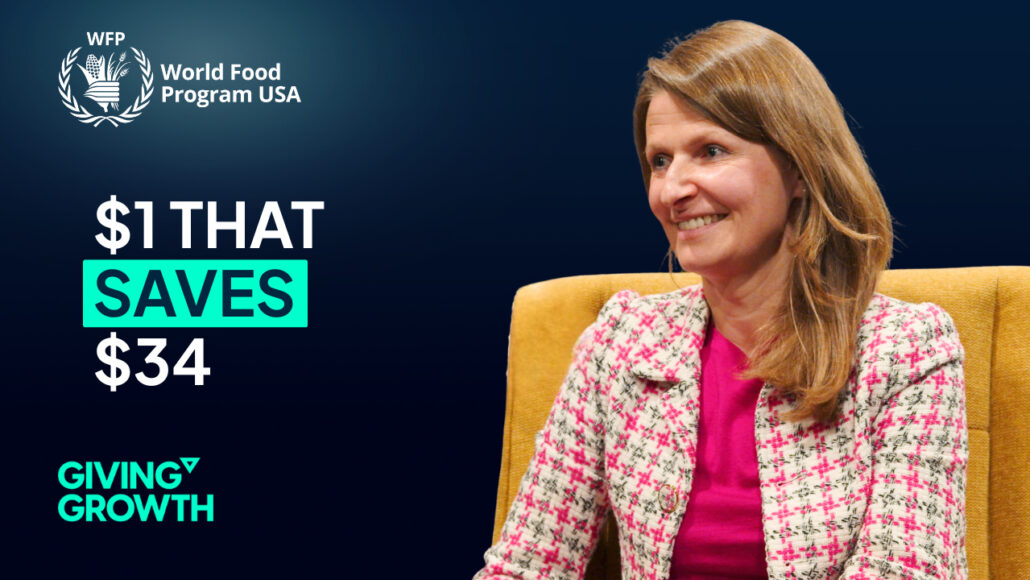
- How WFP USA saves $34 for every $1 invested through anticipatory action
- Why partnerships rooted in trust and shared purpose outperform transactional giving
- The surprising lesson Dorota learned about what really makes partnerships last
- How social-impact organizations can embrace efficiency without losing their mission
EPISODE TRANSCRIPT
Giving Growth Podcast – Dorota Amin (full transcript)
Brought to you by Delve Deeper: https://delvedeeper.com/
Greg Sobiech
You guys have a partnership with Palantir. You have a years-long partnership with UPS and other logistics companies. You’re also a partner with Mastercard.
You also mentioned to me something that you’re doing right now with Google, which is interesting because Google created a really great weather forecasting model that blew out of the water everybody else, and apparently you’re using their model right now. Can you talk to me about that partnership?
Dorota Amin
WFP truly does have a long legacy of really creative partnerships with the corporate sector. Our partnership with Google is one of our new exciting partnerships, not new anymore, it’s a few years in the making. The particular issue that we’re focusing on together is weather forecasting in East Africa, to be able to foresee weather events that could create a crisis-like situation.
A flood in this region, very popular, a drought perhaps. So it’s getting access to information early on, in addition to sort of supporting the initiatives for the countries, is to be able to pre-position support. There is huge savings, efficiency, being able to get to people quicker, being able to do it financially more efficiently.
Anticipatory action is a concept that WFP has been really piloting and pushing for.
Greg Sobiech
Knowing that something bad is about to happen, it’s probably, I imagine, cheaper. Any figures around financially, how does pre-positioning enable you to have more impact because of this partnership?
Dorota Amin
$1 invested in anticipatory action saves about $34 in the span of 20 years on emergency response.
Greg Sobiech
So it’s $1 to $34 ROI? Is that $34 to $1?
Dorota Amin
Yeah. Again, you’re there quicker. You get to people and save lives quicker.
So there is no price on life, but you get quicker to communities that were impacted by it.
Greg Sobiech
So Dorota Amin, Chief Philanthropy and Partnerships Officer at World Food Programme USA, welcome to the show.
Dorota Amin
Thank you. Excited to be here.
Greg Sobiech
When we had lunch before, you spoke to me about how receiving money is great, but building a system that’s scalable, that’s sustainable, that is longer term, may be actually more interesting than just receiving money. What do you mean by that?
Dorota Amin
And again, I know we will speak a little bit more probably about the importance of philanthropy, the importance of supporting immediate needs. And so we’ll be coming back to it. But yes, through the work that I have done in partnerships and philanthropy over the years, definitely have seen an incredible impact of, especially when it comes to partnering with the corporate private sector of transfer of knowledge, expertise in co-creating partnerships.
So it’s, again, it’s not a one way of partnering. It is a partnership, it’s co-creating solutions, but the transformational impact that we can create for and with communities or whatever topics we try to address. So again, I’ll be speaking about the work that World Food Program does around the world.
Other organizations could speak about the work that’s done in communities locally here in the US, but ultimately co-creating solutions to address problems, transferring the know-how, transferring the knowledge, the expertise, the technologies from the private sector where there is investments in this and into the social impact work that we’re doing. And that’s where the expertise from a social impact organizations come in. We’ve got models, we know the things that work, creates transformational change, creates change that often addresses root causes of problems.
And again, as much as we will look at philanthropy to address immediate problems, building this, co-creating this kind of solutions creates sustainable ways of addressing problems.
Greg Sobiech
I liked how you told me earlier that World Food Program and other charities, and we use the word charities, there is already a connotation to that word. And I love how you said we are actually a social impact organization. When you think about creating these deep partnerships that create systemic change with the private sector, and in thinking about the word, we are a social impact organization.
Does this connect for you because there is more impact, there is more value than again, just giving money to a charity like World Food Program?
Dorota Amin
Absolutely. And I also think the other key word is partnership. Again, we come into a conversation and how we can address a problem as potential future partners, right?
So even if we’re just building a collaboration. So, and I do think partners have an equal standing. And I do think, again, it’s not an organization asking for support, which again, there are issues that have to be addressed in that way.
As we are looking again at co-creating solutions, it’s an organization that is an expert in a certain area. Nonprofits often build out models for addressing social problems, community challenges. They’re experts often in that particular area.
And a nonprofit has to come into that conversation with a feeling of strength and pride in what we can bring. And yes, and that creates impact. So again, a nonprofit that is able to channel philanthropy to support its work is creating impact.
So that piece about philanthropy and its importance for supporting nonprofit organizations is critical. So again, a nonprofit can create impact executing its model by channeling philanthropy to enable its work. A partnership is where a nonprofit can bring all its knowledge and know-how, because there is also a know-how on this side, into a conversation with a private sector, corporation, private sector partner, and other stakeholders.
Again, local governments, community members, other organizations, also other organizations that perhaps focus on the same issue. I think the other thing that has been really growing in importance is collective impact. It’s not just one organization trying to solve the problem.
It’s multiple organizations that focus on causes and issues, come together with a group of stakeholders, and then think about actually collectively addressing it. Because I think what we have, as a sector, learned is that one entity cannot solve a problem. And so I think even nonprofit had a little bit of the nonprofit sector had to have that moment of a little bit looking to the mirror.
It’s like, we cannot, we want to own our mission, we want to solve, but alone we cannot, right? And so I do think that again, impact is increasing the ability to achieve the impact is what will drive it. I think partnerships where all of those stakeholders come as potential partners to endeavor.
Greg Sobiech
Let’s make it real. You guys have a partnership with Palantir, right? That’s one of the best stocks of 2025, by the way.
An amazing data company with a strong technology backbone. They’re working with you right now. You have a year’s long partnership with UPS and other logistics companies.
You’re also partner with MasterCard. There are many other examples like that. I think World Food Program can really be proud of.
You also mentioned to me something that you’re doing right now with Google, which is interesting because I remember reading last year that Google created a really great weather forecasting model that blew out of the water everybody else. And apparently you’re using their model right now. Can you talk to me about that partnership?
How did it come about and what’s unique about it?
Dorota Amin
Absolutely. And I will actually even address that first point about WFP truly does have a long legacy of really creative partnerships with the corporate sector. Some go to, you know, decades, decades, right?
Three decades of partnerships. So I do think that even before we sort of launched here in the US, a private sector fundraising arm for WFP, because again, some of them are executed by our colleagues at the global organization. And yes, the Google, our partnership with Google is one of our new exciting partnerships, not new anymore.
It’s a few years in the making. And there are several work streams. The particular work stream or issue that we’re focusing on together is weather forecasting in East Africa.
It is absolutely transferring the knowledge, cloud computing, all of those capabilities of Google to enhance weather forecasting in East Africa, specifically right now focused on Kenya and Ethiopia as a pilot. But it’s not just Google transferring it. Again, it’s a collaboration.
So it’s Google, it is WFP, WFP USA. It is local partners. It’s a weather forecasting agency that focuses on specifically this issue for East Africa.
Also governments of the countries, because again, if you build a system, it needs to live beyond that collaboration that happened. It’s a journey to get to a sort of a concept of what we’re going to do is also a long journey. It doesn’t happen overnight.
It often happens in a course of months or a year and a half to two years, because you need to learn. You find a partner who has capabilities that are of interest or a partner proactively seeks out social impact organizations that sort of focus on something that they would like to take on. You have exploratory conversations, right?
You learn about each other. You also build relationships. And I think one of the things, it is all about organizations working together.
Ultimately, it’s people in those organizations working together as well. There is a pace to it. And again, it does not happen and it’s not a transactional method, I would say.
You need to build a relationship. You need to learn about each other. So, you know, yes, WFP USA had great connections with partners on the CSR side at Google.
That’s perhaps how it started. Google has an amazing, like Google really kind of encourages internally their teams, the business teams to take on issues and sort of support things beyond the business sort of objectives of the company. And so a lot of it is really driven by certain interests of team members or certain teams within Google that build on the technologies and the business side.
So it’s not, those are connected, but it often there is an interest. So they’re looking for certain partners specifically. But again, it’s not just WFP.
It’s not just Google. There were agencies in East Africa who we work with. The government is part of that, partly because WFP in order to execute anything in countries has very close collaboration with governments.
So at the end, that’s what we resulted. It’s a pilot. It’s enhancing weather forecasting to be able to foresee weather events that could create a crisis like situation, a flood in this region, very popular, a drought perhaps.
So it’s getting access to information early on. And for WFP, why it matters specifically, in addition to sort of supporting the initiatives for the countries is to be able to pre-position support. There is huge savings, efficiency, you know, being able to get to people quicker, being able to do it financially more efficiently.
Anticipatory action is a concept that WFP has been really piloting and pushing for, which is pre-positioning support before a disaster happens. It saves.
Greg Sobiech
Any figures around, because that makes sense to me. I would imagine that knowing that something bad is about to happen, it’s probably, I imagine, cheaper to fly, let’s say, food to a place.
You can probably do it more effectively, more efficiently. Any figures around financially, how does pre-positioning enable you to have more impact because of this partnership?
Dorota Amin
Yeah, and it’s actually not cheap. So it actually would be cheaper to pre-position support. And some of the stats that come to mind, and of course, WFP is also looking at this ROI of those different initiatives.
So that mindset of looking for efficiencies. $1 invested in anticipatory action saves about $34 in the span of 20 years on emergency response.
Greg Sobiech
So it’s $1 to $34 ROI. A $34 to $1?
Dorota Amin
Yeah. But again, and there was another stat that comes to mind. $1 invested in anticipatory action saves $3 on that emergency response, that particular emergency response that would happen.
And so there’s cost savings. There is life. Again, you’re there quicker, and you get to people and save lives quicker.
So there is no price on life, but you get quicker to communities that were impacted by it. But yes, there’s also financial efficiencies that could be built into it.
Greg Sobiech
Every social impact organization receives funding from different sources, right? So there’s government, there’s foundations, there’s individual giving, mid-dollars, major dollars. This is obviously a topic, this topic of partnering with the private sector to create lasting systemic change is something that you really care about.
Where did this idea come from? Why is it something that is important to you personally?
Dorota Amin
I do nonprofit work because I feel passionate about social impact. So that’s really the ability for organizations to focus on issues that we’re facing as communities is something that motivates me personally. Building partnerships, philanthropy became my path into supporting this work.
But why I like this is because I want to be involved in finding solutions to challenges that we’re facing in communities, supporting individuals and communities in vulnerable situations. And so I think that just is my personal motivation. I could have done it many different ways.
Being able to be here, work with the nonprofit sector became my path. And fundraising became my path to support that work. And I do think that, again, nonprofit organizations, there is a lot of creative ways of creating social impact.
And I think as the nonprofit sector has been evolving, being, let’s say, an organization that supports through philanthropy or partnerships is not the only way you can do that. There is, you know, different models of social impact of nonprofits creating income generating opportunities. And I think nonprofits should always look for those creative ways of how can I address this problem and perhaps more independence.
But philanthropy and partnerships are a very powerful way of doing it. It also allows other stakeholders to be involved in those initiatives, right?
So I think they create those pathways for individuals. And for us, you know, being a fundraising arm to WFP, engaging individuals, it is so inspiring to connect with individuals. And we, you know, we will connect with donors with whom we meet to discuss larger investments.
But we also hear from donors who, you know, give us a monthly donation of 10, or why they do it is because they want to make a difference. And so that is extremely motivating and beautiful to see that to see individuals in communities wanting to support causes, support other people, truly, like it’s people supporting people. And so I do think philanthropy is a very powerful tool of enabling impact.
And partnerships are for some of the reasons that I’ve mentioned, which is, again, transferring the know-how, the expertise, the technologies from the corporate sector.
Greg Sobiech
You know, as I get older, I turned 50 last year, and you start to think about legacy, you start to think about, and I don’t know if it’s about turning 50, but it’s definitely, for me personally, it’s been a milestone. So you think about, well, what will happen? Like, what impact am I leaving long term?
And that obviously is about my partner, my kids, my team, my friends, right? And the world at large. And as a donor, and I probably would be considered a mid-donor to a number of charities, I like the idea of the money that I’m donating, funding not just something that’s needed immediately, and of course, that’s important, additionally funding something that can, frankly, outlive both of us.
Do you find that speaking to donors, regardless of whether they give $10 a month or $100,000 a year, that having a message that’s rooted in, we’re actually building a system, sure, leaning on innovation from an external partner, leaning on their know-how, combining our on-the-ground expertise, does that resonate better than, for example, emergency response messaging? Or it’s not like that? Or what are you hearing?
Dorota Amin
I think it resonates differently with different types of supporters, partners that are motivated by different objectives on their own, right? So I do think it’s, and I’ll speak a little bit about that piece about emergency and how it resonates, but I’ll first address that piece about, the notion of investing in solution, how it resonates. And the way I know it is, having gone through exploratory conversations with partners, when I speak about WFP’s mission, and I speak about hunger, and lives, and the scale that we have, and then I start going, and some other ways you could engage, and I start saying, and we really want to tap into expertise, and we would love to discuss what kind of expertise, and I start seeing their heads nodding. Like whoever I’m talking to, right?
And you can see that that clicks. Ultimately, they will want to see an impact on a human being. So I think that piece cannot be lost, that I think, you know, just talking about system feels dry.
Greg Sobiech
Yes, it feels very analytical.
Dorota Amin
You want to support a system to support human lives, and I think that ultimately resonates. But saying that, I would like to speak to you about the companies or, you know, organizations of partnering with you on co-creating a solution. Again, I do think, the way I know it from those explorations, I just, I know that it catches.
I see their eyes, I see their nods, I see, and so we can explore this further. So I know it resonates, and again, it leads to some of those incredible partnerships that we have been able to build. At the same time, very often, as we engage in those partnerships, we are still pushed to, yes, I do think that, especially from a corporate sector, trying to communicate impact in terms of efficiencies resonates.
A business will absolutely like to hear that message. But they still, again, they want to impact people. And so being able to translate, even if the funding or the collaboration is focused on improving systems, how are you ultimately helping a community?
Or how many lives are you reaching and how? So I think ultimately, we all, I think people commit to this work, the social impact work to help people. And so we do also, we are often asked and pushed to still identify and capture impact in terms of lives impacted.
And I would say also, you know, coming back to the emergency and how that sort of support for immediate, again, saved life is an impact, right? So being able to save a person from dying of hunger, that’s impact. Like even if, you know, it’s not creating a system, but that’s impact.
Greg Sobiech
I was just looking at my notes, because I read about that Palantir data integration partnership that you guys have had since, I think, 2019. And what I found is that as a result of that partnership, you saved enough money to feed an additional 2 million people. So it’s interesting how, you know, whether that’s social impact, marketing or messaging, or Lululemon selling a new t-shirt, we’re selling both the product. And I think in the case of World Food Programme, I definitely don’t have probably enough appreciation for the logistical challenges that you guys go through. And I think an average consumer or donor doesn’t understand that. And yet I imagine that that’s fundamentally important.
The mechanics of what you do is important, but it’s a mean to an end. I think what you’re saying is that you’re also, there’s a bigger social good that obviously all charities pursue, which is saving lives.
But I, on a very personal level, as a business owner, as a marketer of 25 years, I really like the idea of there being almost this very sort of analytical benefit, which is we’re making our logistical system better, more efficient, leaning on innovation, leaning on know-how, partnering with experts in the field.
And also there’s a huge emotional payoff, which is literally, there’s a meal, there’s someone who’s hungry, who maybe wouldn’t go to school, or who just wouldn’t sleep well at night. And now we’re helping them have a meal.
Dorota Amin
I, so I’ll address that piece about the impact stat around, as any organization, WFP, any other, you have resources that you have to allocate certain ways. If something allows you to save them, you can allocate somewhere else. So I don’t think it’s just a marketing gimmick.
That unlocks the resources for an organization to be able to put it somewhere else. So I do think that is a fact, like how, I have another story for you. That’s actually, it doesn’t relate necessarily to like a corporate partnership, but perhaps it does a little bit.
So WFP has an innovation accelerator, which is an innovation hub. Specifically, it has been created by WFP to enable, to scale innovations, both within a WFP ecosystem, but also perhaps out there in communities. So it’s based out of Munich.
It has supported a variety of innovations within the WFP country offices, et cetera. An example that I have recently got an update on, it’s a tool called Scope, which allows to optimize supply chain management. So again, supply chain, WFP is a logistics powerhouse.
It has supplies, it’s global, moves things, gets to where nobody gets. Optimization of that is such a key piece of efficiently managing resources. And so that tool, what it does, and I think the organization is really interested in bringing again, expertise from the corporate sector to keep enhancing it, right?
AI and an interesting step there. So optimizing when WFP, timing of purchasing, location of purchasing, and that like analyzes market data, how grains, you know, what are the prices fluctuating, et cetera. So that’s what the tool can enable WFP to do.
Perhaps also shipping. I’m not all like, I’m just not all the little details, but it’s, the top line is optimizing supply chain management. And as they looked at what it enabled WFP, 2 million saved in one year for one commodity, one, only one type of commodity in one region.
$2 million saved on management for one region, one commodity in a span of one year. Right. So again, so one I would like to highlight is that innovation within, it’s fine. It’s, you know, enable innovation to allow WFP to do things more efficiently, effectively, that releases resources that could be allocated somewhere else. If, you know, philanthropy or, you know, government funding is, you know, getting limited, then you can reallocate it somewhere else, or you just simply, so like, those numbers do matter. They do translate into how many lives we could then reach with food assistance.
Greg Sobiech
Well, and I imagine not only do these numbers matter, but I remember the year before last, in pop culture or in Wall Street Journal or New York Times, it was all about, for example, one of the stories was Mark Zuckerberg, right, and the year of efficiency. And I feel like right now, because of economic uncertainty, efficiency, so just getting more done with the same, whether you are a social impact organization or in the private sector, I think that’s more relevant than maybe several years ago during COVID when things were exploding and growing. And I wonder if that uncertainty in the market, there is simply a bigger desire for these kinds of stories.
Again, on a personal level, or if I spoke to my kind of business friends, right, who have multi-million or multi-billion dollar organizations, these kinds of stories where, to your point, I can buy a commodity cheaper because I know when the prices go down, or I can transport food in a way that’s cheaper, or I can anticipate that there will be a disaster. Again, your partnership with Google. And I’m getting more from the same, just back to being attuned to what society cares about right now, which is efficiency.
I like the idea of charities almost taking advantage of those waves, being plugged into what donors care about the most, and speaking in a way with language that is top-mind right now for companies, for kind of everyone at large.
Dorota Amin
I do think that it’s a responsibility of any social impact organizations to be most efficient in how you do it, because that’s how you can able to channel the funds towards impact. So for me, the WFP Innovation Accelerator predates way the conversation that we’re having now about efficiencies. So that mindset of finding efficiencies was there a decade ago.
But I would say even beyond WFP and sharing what WFP has done, being a passionate nonprofit professional, I see that as a responsibility for a nonprofit organization to find efficiencies, because that means that you can channel most of the funds towards the work. So efficiency is part of your responsibility towards your mission. That’s how I would see it.
So yes, it’s great that it’s a topic now and you could plug in and sort of highlight your story. It’s more about you should have been doing that work. You can highlight it now.
It’s a popular topic. But I think that mindset, I think, is part of being a nonprofit. Because again, you operate often, like truly, the efficiencies that are kind of expected out of a nonprofit are probably a little bit of that point, right?
So WFP USA, our efficiencies is 91% on a dollar. It means that 91% of every dollar goes to programmatic work, impact work. And that is very important for us as an organization, for the leadership of the organization.
But I also think that point about nonprofits have to maintain your efficiency at 85%, right? So 85%, that probably touches on that. So efficiency is a core element of being a nonprofit organization and your responsibility towards your mission.
Greg Sobiech
Which again, that does bring up an interesting paradox because any long-term project requires an investment in people, in infrastructure, right? These dollars are theoretically not going to serve a meal to someone. And yet the return on that investment or that knowledge share with some innovation sprinkled in, to your point, is huge.
So I wonder if charities are a little bit restricted from creating this systemic change through private partnerships or with private collaboration, because you are held to a standard, which in a way is a bit contrary to creating something that’s lasting. What are you hearing?
Dorota Amin
Absolutely. A challenge for the sector, I would say. But I do think it goes back to understanding your value as a nonprofit, education.
And I think that’s where having a diverse types of partners out there who are motivated by different objectives helps, because then you can find a partner with whom that piece will resonate. That piece about the longer term impact versus, but it’s absolutely, and again, it is a challenge. It’s building to a being a nonprofit sector and expectation you should do it on a lean, lean, lean.
So that is a challenge that a nonprofit has to be able to address. But I do think that there is a way of addressing it. There’s also finding partners who understand this.
To another point, a trend that has been very, very popular, growing in popularity, trust-based philanthropy. And that’s actually where funders do trust that there’s expertise in the sector and they feel like all they need to do is give the funds and have the nonprofit really do what it can do. And we have an incredible example of a corporate trust-based partner that ties to our innovation: John Deere Foundation, now several years, a partner and supporter of WFP Innovation Accelerator. So bringing it back. But also a supporter of WFP Innovation Strategy.
So WFP is really looking at beyond that accelerator is really to kind of the global organization going down to all the country offices to really kind of see the innovation across. So that mindset, that thinking is really part of our culture. It’s a big organization. It takes a little bit of a change, organizational change management that has to happen. And you also have to find ways to do it.
John Deere Foundation supported this work with a multi-million dollar grant over years based on, I mean, again, we presented the idea. It’s not that there is, but it was truly giving the funding for a priority that we identified.
They said like, we would like to support your work. What is the top priority? And they trusted that us investing in innovation, even though I probably couldn’t give them a number, there is numbers, like number of lives that will be saved that will, we, and we will communicate in those terms on the impact of their grant, but ultimately they trusted us and they funded us because we identified this as a key priority.
So I do think that education is part of the process of a nonprofit organization addressing those challenges, but then also finding partners that understand.
Greg Sobiech
So I’m willing to bet that John Deere Foundation trusted World Food Program because throughout the course of conversations, you were able to demonstrate that you are an expert. I also imagine that they were interested in partnering with you because of what they do. I mean, they obviously provide farm equipment, right?
They are, they’re involved in food production. You are involved in making sure that people don’t go hungry. As you think about successful partnerships, such as this one, is there maybe a surprising insight or surprising principle that you now know is critical to making these partnerships work?
But when you were earlier on your career, that wasn’t obvious to you, maybe you had a different misconception about what’s most important.
Dorota Amin
I’ll go back to the second point at the end, but on that piece about what’s different that I have learned, and I, but I’m going to start with a little bit of a joke maybe, but you know, it’s partnerships between organizations, but it’s really like relationships and it’s almost like meeting someone, right? Like you, you do, there has to be a match somewhere, you need to get interested in each other, just like in a relationship. I mean, again, just to bring a little bit more to a human element in all of this, there needs to be something that the two organizations find the reason why they would connect and the initial appreciation, right?
So that’s a little bit, one of the key roles that World Food Program USA plays here in the US is finding a network of partners to match it with WFP’s programmatic work, right? So WFP is a UN agency, we’re actually organizationally separate organizations, but we’re the sort of the funder, the partnership lead for US, in the US for WFP. And when we sort of had some initial conversations, exchanging some information with, with the members of the John Deere Foundation, just really kind of, yes, sharing information about WFP’s work with smallholder farmers, and they are a company that’s really passionate about innovation.
And that is to your point, there was something in them. So like that innovation is important to John Deere as an org, as a company, not only the, you know, selling of tractors or other equipment to smallholder farmers, hence they also care for smallholder farmer communities. But as a company, as a business, they really embrace innovation.
And they have their own story, which is partly why they’re also sharing that with us, like that part of them supporting WFP’s innovation strategy is them sharing their story from their experience of how they needed to change some of the things to become more innovative. When we sort of decided to schedule a meeting between the Innovation Accelerator and the John Deere Foundation, we were matchmakers. And the joke is that we, this was like a perfect match.
They, like the way John Deere Foundation’s team thinks, how they’re reflecting the company culture, the way the WFP innovation at WFP thinks, it was a good match. But again, that was just the beginning. And then you build that sort of longer term process of learning about each other.
Again, what’s very amazing about John Deere Foundation is they really, at that time already, they liked the idea of trust-based philanthropy. So they, from the beginning, were not trying to get too detailed, like they want to understand, they want to understand our work. But they didn’t need a lot of the sort of details sometimes that you have to kind of grant, like it’s part of it, but it’s really they want to understand us, they wanted to, but they all ultimately trusted that WFP Innovation Accelerator knew best how to fund.
So they didn’t need to tell me how a portion of the grant will go here and a portion will go here. That’s, they left to us. The multi-million dollar grant that went to the innovation strategy came later.
There was an initial grant for a year, also not small, like it was half a million for Innovation Accelerator. That’s significant. That’s not, and so they were two of those.
Then they made a three-year commitment for Innovation Accelerator. And then came the big grant. So it’s a journey, like a partnership is a journey.
You do need to align somehow on objectives at the beginning, but you build relationships, you build relationships with people also. So that, again, that piece where it’s people behind those organizations are people. There needs to be respect for what the other side brings.
And then the trust that’s built over the course of the partnership, the exploration of a partnership. And definitely, if you really solidify, you know, conversations, exploration into a partnership, you don’t need to trust each other because you will also encounter things that don’t go that well, right? Like you’ll, I don’t know, it could be anything.
It could be a message that is, that got out somehow, or it’s something that we’re not providing or a timeline of something. So you will encounter things you might need to navigate. Trust and respect helps with that.
And then that piece about what has been surprising. I do think that when you come into a profession or when you learn about this, so for me, you know, my graduate program in nonprofit management was a really transformational experience that I think really gave me a good foundation to sort of implement that passion that I have for social impact. You are told best practices, you are told stories, and you feel like you just need to like apply them.
What I have learned, all of this is much more organic. And I think being able to not go with the flow, but be nimble and sort of understand that things sometimes happen, not just according to a model that you have learned. It’s good to know those models, they do show up.
But it is a much more of an organic experience, how things happen, why they happen, you know, what leads to them. So I think that sort of like, not by the book, what was the big surprise for me? A good surprise, like I like it better this way, but…
Greg Sobiech
But are you saying that letting serendipity play out, letting seeding ideas, maybe with different partners, seeking relationships, to your point, there has to be a connection, seeking a cultural alignment, again, if World Food Program is really focused on innovation, and John Deere Foundation is focused on innovation, because the company itself went through some sort of crises, where innovation became important to it, that these things you have to push.
But you also have to let things play out.
Dorota Amin
Yep. And I think the way I would actually, so the term we use is pitching, I actually feel like there is not almost pitching, like it’s a journey. Like it’s like when if you go through that process of that sort of exploration, discovery, learning about each other, there almost is no pitching.
Yes, you do have to ultimately present something. But probably the work has been done through the discovery and learning about each other versus pitching. So I think that’s so for me, it’s being nimble in the process, being flexible.
And I would say it also similarly applies to individual philanthropy. It’s again, our ways of reaching individual donors at every level are different, right? We could not have a one on one conversation with, you know, the thousands of donors who, you know, are in our database.
But you it’s a journey that you take with the donor too. Like you do, you know, the term that is often used in fundraising is solicitation. And it’s a journey, you meet a person who is passionate about an issue, you know, that your organization addresses in a good way, things that they are passionate about.
So you provide a pathway for them to be able to support this, right. And so I do think that it’s a journey. Those are relationships.
It’s not pitching and it’s not soliciting.
Greg Sobiech
As social impact organizations, back to my earlier point, I love that because the word impact is there. It’s not a handout. It’s something systemic.
What is a more exciting story to the market when it comes to these kinds of partnerships and building systems together and sharing knowledge, sharing innovation? Is it about me being, you know, cheaper, doing the same with less? Or is it really about me being more productive, taking what I have and just squeezing way more out of it?
Your example with purchasing grain, I don’t know if that’s about saving money or is it about I keep the money that I was given, but now I can buy more grain. If I’m saving on shipping costs, is it about now not raising as much or is it about raising this amount of money and doing more with that? And that to me is a story of productivity, which is way more exciting.
It’s also what we think about when we think about AI. So is it a story about efficiency to you or is it a story about productivity or is it something different?
Dorota Amin
I’m going to bring it to a story of greater impact. So as WFP, we do both. The majority of WFP’s work, humanitarian work around the world, 75 percent is delivering immediate food assistance to people who without that food assistance could die.
So we have that incredible responsibility of being able to deliver the immediate help. And again, to save lives like we are saving lives. I speak so proudly about the other work that we do, but truly 75 percent of our portfolio, you know, reach is saving lives.
And that’s a huge responsibility. The other side is that sort of working with communities are addressing root causes. So perhaps we wouldn’t have to deliver food assistance to the same community or person another time.
And that is absolutely how you are able to think about who else I could reach because I wouldn’t have to come back to the same community. Right. And it’s absolutely it’s not like, how am I going to operate if I run out of funding?
So it’s not what motivates this. It’s like, how could I increase my impact? As WFP projects or makes its plans, it’s often tied to insights about the funding that WFP would receive for a year.
And, you know, those numbers in the recent years have been 100 million plus, 100 million plus. Right now, there are 343 million people at crisis level of hunger in the world. So the need out there is way, way bigger than even like the number of people that we can reach is impressive. The number of people who are at the crisis levels of hunger.
Greg Sobiech
So it’s a 3x difference you’re saying? Funding to meet 3x gap that has to be closed?
Dorota Amin
Yeah. Right. And again, still probably very achievable.
Again, like we do say that hunger, like addressing that immediate need of access to food, right, is a solvable problem. So in a way, we’re always underfunded towards the need that’s out there, right? Like it’s, you know, yes, perhaps we could meet the budget that we’ve made for a year.
We truly are always, have been operating underfunded towards the need out there. And again, like, you know, before 2019, 2020, the hunger statistics around the world have been decreasing. 2020, COVID, conflict, like increasing conflicts.
Conflict is a number one driver of hunger. But then, you know, COVID, its implications of food supplies, etc. You know, war in Ukraine, a big piece became about hunger, just because Ukraine and Russia are such breadbaskets for a lot of very basic commodities.
And so the numbers started increasing. And so as much as for many years, we have seen the decrease, starting 2020, they doubled almost. And so right now it is 343 million people at catastrophic levels of hunger, at crisis level of hunger, not catastrophic, crisis.
There are places right now that have catastrophic level of hunger, which means famine. And so again, so I think as we operate with that sort of our responsibility to save lives, so that people don’t die from hunger, we’re always underfunded at this point towards what the need out there, right? And so for us looking for an efficiency, the point that I’ve made earlier is how can I really better deliver on my mission of saving lives?
Greg Sobiech
I think what you’re saying is efficiency is about both being more efficient right now to have bigger impact because of the need that exists now, and maybe productivity is really about that longer-term impact that I can create through a partnership with someone like Google or John Deere Foundation or Palantir or UPS or Mastercard and others that you guys have partnered with.
Dorota Amin
Yeah. And I also would say efficiency, it’s not efficiency for a sake of efficiency to save funds. Why I would see like your term productivity fits better is because so that I could do more.
So it’s like, so I could reach more people or prevent me needing to cut the ratios or the number of people, like, you know, we have an x number of people in a certain program, we have to scale down enrollment because we don’t have sufficient funding, right? So it’s, again, it’s impact. It’s being able to deliver on the impact.
So you look for efficiency so you can keep up the impact that you want to create.
Greg Sobiech
So one of the things that I really appreciate about social impact organizations is there’s actually this very interesting duality of we’re here to support each other, but also if our mission overlaps, we’re also really competing for the dollar, right? But I do think that there is more sharing of knowledge than I’ve seen in other industries. And in that spirit, if I imagine that I am a large social impact organization, but maybe I just have not focused in the past on creating strong partnerships with the private sector. And I really maybe don’t know how this playbook works.
You did say earlier that in your experience, cultural alignment is important, just where my organization as a charity has come from, what I hope to be most important in terms of my principles, my culture, and having a partner, like, again, John Deere is a great example, that’s important. But you also said that personal relationships, as we know, are always really important.
Are you saying that looking for someone in the private sector, in a position of power, a decision maker, who I just simply click with as a fundraiser, that I just have a connection with, and they kind of happen to work for an organization that could be a partner, is that as important as the cultural aspect? Like, where would you start on a journey of creating, of looking for potential partners, but to create, again, lasting relationships that have, you know, large impact over time?
Dorota Amin
I do think that the relationship simply with an individual can help open a conversation. So, I do think that a relationship with, especially somebody in a leadership role, can open the pathway for a conversation, more than a cold outreach would, right? So, like, me reaching out with an email that doesn’t, you know, that is just, hey, you know, we love your support, I wouldn’t do it this way, but we probably will end up, like, many of the emails we get from people that we don’t really have a connection with.
So, relationship can open a pathway. I think with organizations, especially, they are driven by other objectives, too. So, I do think as much as the relationships are key, and I think in corporate world, perhaps even more than in foundations world, where, like, the priorities of foundations drive, ultimately, you need to build a partnership around shared objectives.
So, a nonprofit coming into a conversation, even if it has been opened by a leader at one or the other organization, needs to understand the objectives of the other partner. The alignment in objectives, like, culture does matter, and that’s where the click means, and it, like, the journey goes easy, but it’s really the objective. Even if, let’s say, culture is a little different, the shared objective at the starting point is what really will be the grounding for that partnership.
And I do think that that’s where companies built their CSR priorities with certain things they want to achieve, objectives they want to achieve in communities, as a business, etc. And so, understanding that for a nonprofit is a good insight to start building a conversation, and understanding if a nonprofit, if we do match that, right, if that’s a good match for us, too. When we were chatting over lunch, you mentioned about, do you know of anything that went wrong?
I do think when it goes wrong is where you misalign on objectives. So, I think alignment or objectives of what you’re really trying to achieve, and perhaps transparently on what you’re trying to achieve, is, as an organization, is a really key starting point.
Greg Sobiech
Yeah, it’s really interesting how we all know about fundamentals, right? Like, we all know, I should sleep well, and I should go to the gym every day, and I should eat well. And then how many nights do I eat junk food, or I don’t sleep well, or I don’t go to the gym because I don’t feel like it.
And it just always goes back to fundamentals. And I think what you’re saying is, whether I am marketing through digital, I need to reflect the needs of my audience. If I’m talking to a mid-donor, why is she motivated in donating to my cause?
And if I am working with a corporate partner with a goal of establishing something that’s high impact and lasting, it also starts with listening. And I am pitched to donate a lot. I am surprised, frankly, how many times someone doesn’t ask me why I care to donate to a cause, right?
I told you my father died of cancer. Of course, I’m going to donate to cancer. But I care to donate to cancer through the lens of a little boy, little girl who lost a parent, not through research, just because of my life experience.
So what I’m hearing you say is that it’s important to listen to that corporate partner, to that individual, and really understand their motivation. And like you said, it can’t just be about them plastering a logo on the cause so that they feel better about it. But it’s truly, there’s true deep alignment between my organization and theirs.
And there’s also deep personal alignment. And I guess that starts from listening, which again, obvious leading point, but I know I forget to listen sometimes.
Dorota Amin
Yeah, absolutely fundamental. I would say that that ability to understand, is it an individual donor? What you said, it is an individual donor, it is a corporation understanding their objectives.
That’s what we would say. I mean, for an individual, you could also speak of objectives, but motivators, right? So it’s critical as a fundraiser, as a somebody who tries to channel philanthropy partnerships, that’s key.
That’s a key skill and an ability to listen. Yeah, that’s key. Yeah.
Greg Sobiech
Now, shifting gears, obviously for you personally, partnerships are important and you are the chief philanthropy and partnership officer. So that makes sense. But obviously you’re also the chief philanthropy officer.
So you have a big role and you look at all kinds of philanthropy, right? You look at, I’m sure, mass donors, mid, major corporations, foundations, all sources of funding. When it comes to donors, to individuals, regardless of their giving level, is there something that you see as a trend that social impact organizations should be paying attention to?
Dorota Amin
Yes, a couple, I would say, or maybe more. But I do think in the sector, there is a lot of conversations, articles about this generational differences, right? So again, like the expectations of younger generations as they are very passionate about causes and how they want to be involved in making change.
So I think that is different from perhaps what we’re used to more from older generations, more traditional philanthropy, which is how do I provide philanthropy to enable something, right? Younger generations want to be involved, want to have direct impact, want to make a difference. And so I think that has been, you know, again, this conversation has been for, it’s not new in a way, it has been going on.
The other sort of trend and shift, even when it comes to those more traditional philanthropic donors at the higher levels, older generations, a notion of, which brings us back to the conversation about, you know, philanthropy versus investment, the idea of investing, even if it is to cover an immediate need. So it’s not the need that the funding is channeled for, it’s the thought of a philanthropist who is passionate about hunger in the immediate, again, can still invest in events and invest in a model that a non-profit is developing to address that issue in the best way. So I think being able to speak to donors and show them the sort of impact of their investments is what I think has been resonating more and more recently from, you know, more than perhaps before where, you know, in the years and eras of the traditional philanthropists.
The sector has been changing, the corporate sector, so that that different approach to what the expectation is on the corporate side has also been evolving from that transactional when it was, that was all they needed. They needed a benefit of visibility and that’s what, they’re still there, like there are still great opportunities of events that generate funding where that applies and it makes total sense for those opportunities. But I think the corporate sector has been changing and I feel like I have even seen it in the last, I would say, five plus years, like specifically when I came into, because my first role with World Food Programme USA was actually Director of Corporate Partnerships and I came from a university, which that’s very different, like universities build corporate partnerships and the starting point is about something else, it’s research and recruitment. So I came to WFP USA and this was about the time where this stakeholder involvement, like the piece about, it’s not only about shareholders, it’s stakeholders and I feel like I started seeing that be spoken about more and more and what I really think it has, and so the corporate sector was taking responsibility for things as a citizen, like as a, you know, the corporate citizenship, right, that notion was coming to life for me.
What I really think it has shown up, COVID was the first time, when COVID happened, the active engagement from the corporate sector, is it in global hunger, the support that WFP USA received for WFP, or is it local communities? I think that was the first moment where you really saw corporations take up a stand and Ukraine is another time. I think that’s where the corporate sector really stand up to, like, support the cause.
And so I do think that the sector has changed. And so again, so I think that piece about understanding objectives, what they want to do beyond a logo, or if it is just logo, you also still have to understand this, right? But I do think the sector has evolved.
And so it’s really still ties to the same point that we just talked about individuals. It’s like, it’s the sector, the philanthropy has been evolving, which is great, right? We’re adjusting, we’re seeing how we can better do what we do to create impact.
Greg Sobiech
Yeah. Well, what I’m hearing is this obvious shift from, you know, and because I donate, and I think with a couple of charities at major level, you know, you get invited to these dinners, right? Around the holidays, typically.
And there’s pushback, especially lately around, well, is that the best way to spend our time and money? By having those kind of once a year get togethers, right? When you are a tuxedo.
I personally think it’s great. I love those parties. I think it’s wonderful to talk to people and get to talk to people who actually do the work to understand what’s actually being done.
So I love going to those events personally. I also like hearing, and that’s what I think you’re saying, that I am not just donating to a social impact organization. I’m actually helping to build a system because World Food Program is a system of interlocking parts that happens to be called World Food Program.
But you guys could be doing what you’re doing, transporting other goods in a for-profit context. And I think what you’re saying is that that is something that not just the next generation of donors, but also corporations and the private sector like hearing about. And I wish, and this is really an opinion of someone who’s been in marketing for 25 years since 1999, but I wish that more social impact organizations spoke about the fact that they are a system.
They’ve built this incredible know-how. And yes, we’re saving lives. We’re literally making a difference, but it’s because, especially at your scale, you have developed this incredibly set of interlocking parts.
And when I donate, yes, I am funding a meal, but I’m also supporting this system and helping it be more effective and more efficient. And as a donor, I don’t hear charities speak about this enough. And I think that your passion towards partnerships, it brings that to the surface.
I wish that was spoken of more often in terms of in messaging, in press releases, in emails, in videos. From my perspective, and I speak to many kind of C-level development professionals, that doesn’t come up very often.
Dorota Amin
So as a marketer, you probably also know how hard it is to get through all the info that we have around us, right?
Greg Sobiech
Yes.
Dorota Amin
The complexity of that story just doesn’t. So it’s harder. It’s harder than a simple story of a meal being given to a person.
So in mass communication, mass channels, it’s just hard. I do think what we have at WFP is amazing content and footage from the field. So often what our team, social media teams will do here, WFP will do, is really short videos that show that car that goes through a river and a way of getting food.
It’s not even just a car. I do not remember what the name of that is. It’s an automobile, but it’s specifically made for getting through rivers and places that normally a regular vehicle could not get through.
Or, you know, the very famous, which WFP is known, the drops, right? Where you have a plane over areas that are remote, where nothing else, no other way would be able to get there. And so I think that footage helps to show it without getting into the complexity of what it takes.
That complexity would probably bore people out. In the sort of flood of information that we all are receiving on a daily basis today, it doesn’t get through. We absolutely engage in those conversations with those donors with whom we do have an opportunity to speak.
I mean, again, essential in talking to a corporate partner where that’s part of the journey, but also for those donors with whom we have the in-person time. And so we go there. But I have to tell you, even, you love the work.
I just, I really admire the work that WFP does in the field. And I spend a lot of time reading about this. I just, I am always passionate about nonprofit programs.
So that’s my just personal interest. So I’ve always, before I had an opportunity to actually go and see WFP’s work in the field, I knew tons of it. And, you know, I dissect programs.
I take them apart. I look for impact. But really, when I went to the field and I spoke to WFP field staff, that’s where it comes to life.
The complexity, the layers to it, that even the overviews and the materials that I read do not give me to this. Like a one pager flat it is out. It’s like, so you really cannot cut, you need to really understand it’s a context.
Very often our work specifically for WFP. And I think every nonprofit would have a different sort of perhaps story there, but we operate in context. And the way we save lives, the way we develop our programs, it matters on the context, it’s developing in the context.
So a two pager about emergency response will never give me enough detail where the beauty and the magic of WFP’s work happens. Like I spoke to one of our country directors who used to be in Tanzania. They needed to get food through lake.
They literally needed to put that there was something that they invented of like getting a train on the ship in order to get to, because that was the quickest way. Right. So like, it’s just that’s what like, that’s where the beauty of that is.
I would never get that through many of the overviews that I’ve read in order to understand WFP’s programs.
Greg Sobiech
Fair point. We are all addicted to quick information. It’s all an attention economy right now.
And I see this again and again, emergencies work and yet it’s terrible that they work. Right. And I also think that we are deeply desperate for deeper stories and ways to connect on a deeper level.
So maybe it is both ends. Maybe it is both about being reactive and addressing that’s immediate. In a way that’s efficient.
And it’s also about telling a deeper story at the right time. Maybe it’s one-to-one. Maybe it’s over long-form video.
I think that that makes maybe exactly the right thing to do.
Dorota Amin
That actually brings me to the point that you’ve made about events and, you know, and the feelings about them, because I do think that they are about connections and about a connection to, and again, that’s where the guardrails of efficiency or 85%, as long as a nonprofit sort of keeps that, which again, it’s our responsibility. Those times are an ability. It’s a connection of community of donors.
So I think some donors are really drawn by them because they find that community and they like that. So, but even below, beyond that, that’s an opportunity for a nonprofit organization to keep them connected to the mission. Like often those events have mission components to them.
They’re not just about the event. And I, as you were asking that question or reflecting on this, I was thinking about like, how else would we, you know, keep a donor connected, right. Which ultimately leads to them continuing to support, which we want, because that allows me to gather the funding that I need to support the mission.
And if it was just about me emailing, the connection gets weaker and weaker with time, right. And so I do think that they are really investment in being able to deliver on the mission, providing that, again, they’re not excessive. They’re not like all of those, those rules stand, but they really are actually in the longterm helping that nonprofit to be able to deliver on the mission.
Greg Sobiech
Dorota Amin, Chief Philanthropy and Partnerships Officer at World Food Program USA. Thank you so much for your time. I’m walking away with a much deeper understanding of World Food Program and really deeper passion to see social impact organizations as builders of system that enable social change versus just someone who more work has to be done to really unpack the story, to show what’s happening behind the scenes.
Because I think people are eager to hear those stories.
Dorota Amin
Thank you. Thanks for the invitation. Thank you for having us, for your interest in our work and for opening up the space for these conversations.
It has been a pleasure and fun.