How Non-profits Can Reach New Donors Without Bigger Budgets

Get one
powerful idea.
Subscribe on:


EPISODE SUMMARY
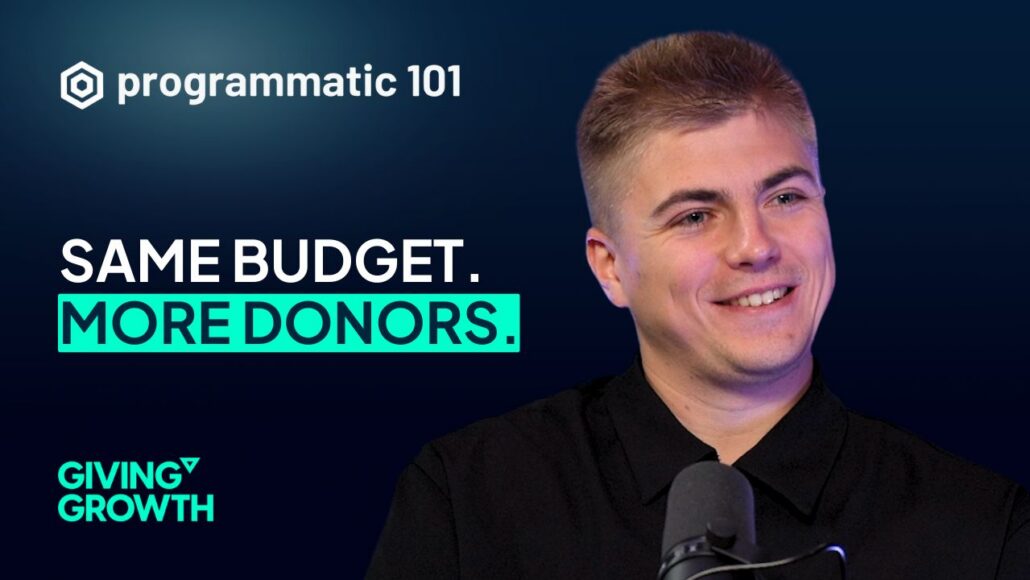
In this episode, Greg Sobiech sits down with Vlad Chubakov, Associate Director of Programmatic at Delve Deeper and creator of Programmatic 101, to unpack how programmatic advertising can help charities reach new audiences without increasing their budgets.
Vlad breaks down what programmatic advertising really is, why the traditional giving pyramid is cracking, and how nonprofits can use channels like YouTube, connected TV, audio, and digital out-of-home to drive top-of-funnel growth.
Greg and Vlad discuss:
- Why is paid search no longer enough to drive sustainable donor growth?
- How does programmatic advertising actually work for non-profits?
- What does “democratizing access” to premium media really mean?
- How can charities reach younger donors on YouTube, CTV, and audio?
- What’s a smart first step for non-profits testing programmatic?
EPISODE TRANSCRIPT
Giving Growth Podcast – Vlad Chubakov (transcript)
Brought to you by Delve Deeper: https://delvedeeper.com/
Greg Sobiech
There is a problem that non-for-profits can’t ignore. The traditional giving pyramid is starting to crack. The count of individual donors is declining for the fourth year in a row, and yet donor revenues continue to increase.
Older donors are aging out, younger generations aren’t filling the gap, and a volatile economy is squeezing non-profits from all sides. This is Giving Growth, the podcast where we talk to leaders who are reshaping the non-for-profit world and tackling these challenges head-on. Sign up for the Giving Growth weekly newsletter and learn about one idea worth sitting with every Wednesday by going to delvedeeper.com/podcast.
My guest this week is Vlad Chubakov. He is the Associate Director of Programmatic at Delve Deeper and the creator of Programmatic 101, one of the most practical learning platforms for understanding how programmatic advertising really works. Vlad told me that when he went to the Programmatic I.O. conference a couple weeks ago in New York City, everybody recognized him, which I think is a proof of how popular his series of podcasts and shares and videos has become in the digital marketing, programmatic advertising community.
Vlad is also a part educator, part operator. He does break down these complex ad tech systems into strategies that drive impact in his online series. And through his YouTube channel and the community that he has built, he’s helping thousands of marketers around the world master the fundamentals of data automation and media buying in the context of programmatic advertising.
And at Delve Deeper, he is leading programmatic strategy for some of the world’s most purpose-driven organizations. In this conversation, we will discuss demystifying demand-side platforms or DSPs, optimizing ad performance, and explore how AI is reshaping the future of donor engagement. Vlad Chubakov, welcome to Giving Growth.
Vlad Chubakov
Yeah, thanks for having me. Always up to talk about programmatic, so let’s do this.
Greg
The word programmatic is confusing because everything that’s systematic is in a way programmatic. And then you think about programming. Just start me off with what is programmatic advertising?
Vlad
Yeah. So basically, all modern advertising platforms use programmatic to serve ads online. So Meta, Google, they all use programmatic pipes to serve their ads, but they’re not considered as classical programmatic channels.
So programmatic is an automated way to buy ads online, but it uses DSPs, demand-side platforms, to buy ads through CTV, digital out of home, audio, pretty much everywhere you can connect to the internet.
Greg
Let’s make this a little visual for the audience, right? So if I go to Wall Street Journal or New York Times in the US, I see advertisements. Some of those ads are, I think, bought directly from those publishers.
Some of those ads are bought programmatically. Can you help explain to the audience, how does this work? How does the process of placing ads on publisher websites work?
And maybe contrasting an ad that’s programmatically placed versus an ad that’s placed directly. That will provide a good juxtaposition of what it really means to place banner ads, video ads, audio ads programmatically.
Vlad
Yeah, actually, it uses a very complicated technology behind this. And unfortunately, a lot of middlemen in this supply chain. So there is a demand-side platform that buyers use.
So for example, what my team used to buy ads online, there are resellers or SSPs. Basically, they’re gathering and combining all of the inventory placements and helping to run those auctions there. And so there are publishers like New York Times, CNN.com, all of the others that are selling those placements. So they call sellers, TSPs call buyers. And there are middlemen who are combining demand and supply and connect them to buy ads online. So this is a very simple way to describe it because there are a lot of nuances.
It uses auction-based technology to do this. So don’t want to go into the weeds of this, but it’s a very complicated technical way to buy ads online.
Greg
So what are the different ad formats in Programmatic? How is Programmatic different from a visual perspective or an audio perspective than paid search or paid social?
Vlad
Yeah, so one of the emerging channels is connected TV. So connected TV is ads that now you can buy via DSPs and they will be shown on TV. So on streaming services like Amazon Prime, YouTube, now Netflix.
So also Programmatic gives buyers ability to buy digital out-of-home ads. So typically you had to call to some company, sign a contract, provide them with assets or some physical ads to place them on billboards. Now you can generate ads using AI and buy it programmatically on out-of-home placements, for example, on Manhattan, on like Times Square.
So it’s really exciting how Programmatic is democratizing access for buyers to previously like really premium placements. Because also speaking of CTV, previously you had to call to cable and also sign a contract, pay hundreds of thousands upfront. And so I’m really excited about this technology, because it just allows buyers to tap into the format that weren’t previously available for them.
And so be everywhere, digital out-of-home, audio, streaming services, display, native, mobile, everywhere. And connect it into the omni-channel strategy, where they can guide their potential donors from top of the funnel to the bottom of the funnel.
Greg
So I love how you said that Programmatic advertising is democratizing access to different formats. And I really like how you phrase it, because you’re right when I think about, you know, placing an ad on these displays, right? Digital out-of-home displays that we see when I’m walking on the street, that just seems very expensive.
Or maybe if I’m in the metro in New York, or subway in New York, or metro, right, in Warsaw, or tube in London, there’s digital out-of-home on the train or on the bus. That also seems like I have to make a huge commitment. You spoke about the shift from linear TV to connected TV.
Again, when I heard the word TV, I hear expensive and branding. I also know, because we work together, that Programmatic is about placing ads on Spotify using Trade Desk. So again, if I think about placing an audio ad on Spotify, on Joe Rogan’s show, for example, that all seems expensive.
Are you saying, and this is obviously a leading question, by the way, but are you saying that Programmatic makes it, democratizes access because it’s less expensive? Or what does democratizing access to different formats mean to you in the context of Programmatic?
Vlad
It gives you one platform that has access to all of the possible formats you can ever imagine. And so if you have the right strategy in the place, it is not expensive. Because if you use the right measurement framework, you have the right expectations.
Because what I realized is that a lot of marketers, they are so focused on short-term, immediate growth. Sometimes it’s weeks or even months. So it limits their potential.
But speaking of Programmatic in this context, strategy is the most important pillar here. Because if you just have, imagine, if you have a budget and I want to be on CNN or on Spotify, and your goal is to just spend this budget, that’s not going to yield any successful results. And so that’s why I think strategy is really important here.
And so if there is a right strategy in the place, you can use the strategy to use all of these kind of formats. And it’s not going to be expensive because it will be targeting the right audiences. You will know how to measure it.
You know what inventory is the best for you. And so you will be in front of your audience and serving them right message. So strategy is the most important here, I think.
Greg
How I think about what you just shared is that, because I was thinking like, how would I explain this to people that I know who maybe haven’t experienced Programmatic? And I would argue that when it comes to paid search, when it comes to paid social, TikTok, Instagram, we all know that I could spend $10 a day. I could spend $1 a day, $10,000 a day.
Whatever it is that I want to spend, that can be done with a credit card. But when I think again about digital out of home, if I think about connected TV, if I think about banner ads on the homepage of New York Times, if I think about, again, that ad on Lex Freeman’s or Joe Rogan’s or anybody else’s podcast, I don’t think $10 a day. I think lots of money.
And you also made this point that then it’s hard to even measure. But I think what you’re saying is that with Programmatic Advertising, I have access to this really like kick-ass, amazing inventory in places where I normally before, maybe 20 years ago, I couldn’t afford to be there. And it also behaves like digital marketing or digital fundraising in the context of charities.
Is that a fair way of describing what democratizing access to formats means? Or what am I missing? Or what would you add?
Vlad
Yeah, I think you are right. And you can access all of these placements. You don’t need to have upfront commitment.
So I have to spend $100,000 and not having any control on targeting, time placement. It just gives you access to all of these premium placements that weren’t available for buyers previously. And $10 obviously is not enough because CPMs are higher.
So for $10, it would be like 1,000 impressions. That’s not a lot. But my point is that now with the right strategy and precise targeting, it’s definitely not $10, but it’s not also $100,000 upfront payment.
It’s more data-driven. Also, again, based on your strategy, whom you want to reach, what’s the geo, you have full control over your targeting. And you don’t need to commit to really high budget.
So you have full control over your media mix. And you can adjust it in real time, apply optimizations if you see that something is not right. And so it gives you even more power in your hands over your media strategies.
So this is what I’m really also excited about.
Greg
So let’s think about, and you and I didn’t rehearse it, so I’m just going to put you on the spot and let’s just see what happens, okay?
Vlad
Yeah.
Greg
Because how I often do these interviews, you and I shared notes for the show, so just so the audience knows we do prepare for these interviews extensively. But then often what happens is that the conversation takes like a very interesting twist. So here’s a twist that I want to test with you.
Imagine I’m a charity, right? I’m a top 100 charity. Maybe I have a five, $10 million budget, annual budget.
Let’s say that right now I’m spending most of the budget on paid search. We both see that happen a lot. And yet we all know that paid search is really a bottom of the funnel type of a strategy, right?
It captures existing demand. And many charities right now struggle with knowing how to bring new donors to the funnel. And you already alluded to this a couple of minutes ago, because you did say several minutes ago that this is a way to maybe find new audiences.
How would you talk to that C-level, director-level executive at this charity explaining why programmatic advertising is one channel or one method to explore to bring new donors to the funnel?
Vlad
I like the question and…
Greg
Thank you for liking the question, by the way.
Vlad
Yeah, because that’s my day-to-day work to speak about this. And I think I’m that data nerd. So I try to use data we have.
We have a lot of data about like incrementality of different channels. And so what we learned having all of this data is that channels like paid search, their incrementality sometimes like 10%, meaning that 90% of all of the other donations they drive would have happened anyway. And so my question would be to this C-level person, um, do we want to pay for all of the donations that would have happened anyway?
So, okay, so we have like 5 or 10 million and we can basically like spend this money on getting this 10% of new donors. So is it worth it? Because CPA in this scenario would be probably thousands and thousands of dollars, maybe tens of thousands of dollars.
So I think that programmatic is a channel when is it executed right with the right strategy can allow us to tap into this new donor audience. Usually it’s younger demographic because again, like we have access to Connected TV, Millennials and all the other like younger generations that don’t watch Linear. They listen podcasts, Spotify, like SoundCloud, watch YouTube a lot.
They don’t really hang out on like this legacy media placements like Washington Post.
Greg
Yeah, like the places I would go to, you’re saying.
Vlad
Yeah, yeah.
Greg
Yes, this is a very good example, by the way, because you’re right. I’m using the example of New York Times or Wall Street Journal to talk about programmatic. And what you’re saying is that’s you, Greg, because you’re 51.
If someone is 25 or 30 years old, maybe they’re on Reddit, right? Yeah. And maybe they’re listening to a podcast.
Vlad
Yeah, I would say they’re mostly consuming either social or like YouTube streaming services and podcasts. So this is what all of the research is about time spent on different platforms for different demos show.
Greg
Well, and to your point, I think YouTube is an interesting example because it is right now the biggest streaming platform like leaving Hulu, Netflix, right? Disney, Amazon, way behind from time watching content spent. I think I was reading something that Nielsen reported lately that just on desktops, YouTube is 13% of all consumption.
But then you look at mobile, it’s closer to 25%. So one fourth of all time is spent on YouTube. And YouTube, surprisingly, can be bought programmatically.
Obviously. How would that work, right? If I wanted to reach new audiences, someone who’s 25, 35, and I’m a charity, and maybe I tested YouTube in the past and I got burnt, maybe I didn’t see much back.
What would you tell this charity to do with YouTube differently to the lens of programmatic advertising so that they would feel like something is actually working?
Vlad
Yeah. Good question. The thing with YouTube, and I think with all programmatic platforms in advertising overall, is that this channel is different because it has, especially YouTube, not infinite supply, but close to it.
So you can just give me just random number, like $10 million budget that should be spent per week. In YouTube, it’s like one click. Probably you could spend it in one day because supply is like, there are a lot of videos.
I don’t remember exactly the number of hours of video uploaded to YouTube every minute or something. That’s mind-blowing, this amount of hours.
So it should be executed right. Because if you just, oh, I want to be on YouTube, I’m uploading my assets, activating campaign, you’ll find your ads on some sleep videos, if you know what I’m saying. Some videos that helps people to get to sleep faster.
Greg
By the way, I’ll be one of those people watching those videos because it’s hard for me to sleep.
Vlad
Yeah, so a lot of videos like that. And so again, the same as in classical programmatic advertising, I recommend limiting number of channels. So applying a low list in order not to appear on some random channels, videos, etc.
So it should be executed right? So placement should be limited and measurement framework should be in place. And so YouTube is like a tricky because I would definitely recommend to show ads on TV and measurement still is not the best part of YouTube advertising.
So I would rely on classical measurement approaches like geo-holdout tests, because it shows us the effect of programmatic advertising. It doesn’t rely on identity technology because space is like really fragmented. So there are tens, maybe hundreds of different IDs like cookies, UID2, ID5, like tens or maybe hundreds of them.
So there is no one unique identifier that can show these conversions for us. So I would rely on more classical geo-holdout tests. So maybe pick one state as like control, then one as exposed, run YouTube.
And then measure what’s the lift in donations, for example, over a certain period. And again, it shouldn’t be like one week. It’s a top of the funnel.
It requires some time because we need to introduce our brand to the donors, capture their attention, serve our ads multiple times. Then I would say we would want to run some kind of like free prospects and campaigns also have more touch points because also what we found out is the more touch points with different channels and formats you have, the higher conversion rate is. So if you like run only YouTube, also not very successful strategy.
So when you are creating demand, you need to capture this demand. So full strategy from top to the bottom. This is how I would do it.
And also have a really detailed plan on how I’m going to measure it. And I don’t recommend rely on just platform conversions. It doesn’t make any sense because they are rating their own homework.
They are showing all of the conversions when impression happened. So that’s not really informative. It doesn’t tell us what incrementality was.
So, yeah.
Greg
I like to watch this Formula One show called Drive to Survive. I imagine in a way that programmatic advertising would be a little bit like me getting into an F1 car. And let’s assume that I could even put the car in the first gear, which I understand to be really hard to do.
So let’s say I put the car in the first gear. I’m pulling out of the paddock and I’m trying to get on the actual track. And knowing me and just knowing how hard these cars are, I probably would crash it.
And my sense is that often when charities and brands get into programmatic advertising, because someone sold them on an idea that sounds exciting, right? Your ads will be shown on YouTube and it will be on Joe Rogan’s podcast and they’re going to be on the digital out of home when people walk home. And it’s going to be an incredibly engaging creative and people will spend a couple hundred thousand dollars in 30, 60 days expecting magic.
And then they crash in the car, right? The Formula One car goes off the track and it’s really hard to almost recover emotionally from that crash. So I think what you’re saying is that, yes, it is a very powerful vehicle.
So that’s why you really need to think about it carefully, how you get started with it and how you manage and how you measure it. But a part of me also feels like maybe it’s not like a Formula One car. Maybe I can start with smaller budgets in very specific scenarios and just kind of dip my toes in the water, do a bunch of smaller steps.
Going back to that example of a brand that spends let’s say 5 million a year on digital, most of it is in paid search. Give me more details about a specific plan that you would design for them. Like would it be YouTube?
Would it be a podcast? How long? How much?
Like what are a handful of key checkboxes to focus on to make that first step to get a little bit more confidence that this is something to explore further?
Vlad
Yeah, I actually wanted to comment on first part of your question about F1 car. And what I realized is that marketing teams in general, they treat Programmatic as one more Google Ads-ish kind of channel. So they use their resources, they use their team that run Google Ads and like now you manage Programmatic.
It doesn’t work because you need to have the resources who are kind of their focus will be on Programmatic channel. They should have right experience, relevant experience and know what to do because if we just replicate and Google Ads meta approach, it’s not going to work. Now like switching to this example, I like this because this is what we do a lot.
And realistically, I acknowledge that just starting with pure brand awareness play for like 18, 25, 24 years old audience, that’s not the right start. So I would recommend starting from more classical display and video approach, premium inventory. But think about measurement as an endless repetition and endless test, I would say, and endless experiments.
So we run a lot of different studies. So we run brand study to understand how our ads impacts in like brand awareness. Are people really want to buy or like to donate to a charity after they saw.
Also we run IBI test, which tracks what people were searching for after they saw our ad. And so we can see if they’re searching for this charity, other charities. So it also can give us some sense what’s happening.
Then conversion lift study, more fundraising focused study that show us how exactly programmatic impacts other channel conversion rate, because it’s super important. Programmatic is not a conversion driver itself. It starts conversion path and channels like search, they close conversion path.
So when we run programmatic ads, we see that paid search and meta CVRs are significantly higher than without programmatic. And so also we run classical conversion lift studies that show us what’s the impact on overall website conversion rate after we activated programmatic. So and then we have all of these data points that we show to like our clients.
And OK, so here is how we, what we see in terms of website CVR. It’s increased by like 20%. Paid search, paid social CVRs increased by 200% because people are warmer.
They know about this brand. They’re searching more for this brand. So they are ready to convert.
And so we see increase in CVRs. Also, we see uptick in brand awareness. So more people know about this brand.
So we’re filling this funnel. And then other channel’s job is to convert this demand. Getting back to the question.
So I would start from more classical digital web-based programmatic with display video with all of these studies in place to prove that, hey, it works. And then we can test CTV using this framework. But it will be just easier to convince people in the room to do this because we’ve already shown great results.
We have a lot of data points showing that we’re doing the right thing. And we can just build on top of this success and achieve significantly more with more powerful channels. And also, we’ll have all of these data points.
So this is how we’re doing.
Greg
And how much would you recommend that this brand that spends 5 million here on digital and it’s mostly search, when should they test programmatic? And how much should they be willing to commit to this test?
Vlad
Usually, a lot of data points I saw is when their paid search efforts, so they’re adding more and more budget to their top of the funnel channels, but their revenue is not growing and sometimes declining. And it’s easy to understand why. Because they’re not driving new users.
They’re existing customer base. They’re existing donor base. They’re aging, less donors.
So they’re not attracting new donors. So it’s a collapse of this given pyramid that we talk about a lot here internally at Delve Deeper. So maybe somewhere here will appear a link to download it.
So yeah, I definitely recommend very detailed report from Delve Deeper about the state of the industry. Very helpful. And so yeah, they’re not filling this top of the funnel with new audience.
And their bottom line revenue isn’t growing and sometimes it’s declining. So this is where they should start conversations about top of the funnel channels. Speaking of the budgets, typically, number I have in mind is like 10% of your existing budget can be allocated to this test.
And we can start from there. Over time, this proportion should change because bottom of the funnel channels, they’re important. But they shouldn’t make up to like 90% of the budget because there is no value investing in existing demand all of this money because it is not driving your revenue.
It is not driving your donors. And it impacts negatively on overall experience because frequency is high. It can lead to donors, like to user fatigue, creative fatigue.
So yeah, definitely not ideal approach.
Greg
You know, as you were speaking, I was thinking about how charities do direct mail right now. And the big topic in the community is around using co-ops. Co-ops are these aggregators like Wiland where you exchange with each other.
In the for-profit world, this used to be Abacus, for example, or Epsilon now, where, you know, retailers or charities share data about donors or customers. And then you can kind of cross-target each other’s lists. And what’s happening now is that these lists are shrinking because donors who respond to direct mail are aging out.
And charities are pursuing the same exact audience again and again. And, you know, you can’t expect different results if you do the same thing again and again. And it feels to me like doing just paid search, which I would recommend the charity does in its mix, it’s the right thing to do.
Just like I believe that doing direct mail is the right thing to do. Don’t cut direct mail.
Maintain direct mail. But if it starts to your point to show diminishing returns, like to your point, paid search would show, and I think there are many analogs there, we have to put the money somewhere else. And it doesn’t have to be programmatic, but it can be paid social.
Maybe it’s about growing your, AI, SEO. Maybe it’s working on your email list. But I think what you’re saying is you have to diversify to drive top of the funnel.
Programmatic can be one of those channels.
Vlad
Yeah. I mean, I’m biased, obviously. I’m like a programmatic trader.
Greg
Yeah, you’re biased a little bit.
Vlad
Yeah, a little bit. But what I definitely would recommend is to invest in social because social is growing really fast and it’s still keep growing. It’s going to grow because people still spend a lot of time on social, especially younger generation, obviously.
And one of the area that, for example, programmatic advertising isn’t covering is influencer marketing, which is the fastest growing marketing pillar right now. So I don’t remember exactly, but it’s probably like 1000% growth year over year in ad spend in the US.
Greg
On influencer marketing specifically.
Vlad
Yes, yes. What I realized is there are brands that solely rely on their digital marketing and not doing anything else. And this is a big problem because the way you think about digital marketing is it’s just a vehicle or delivering your messaging to the audience. If you don’t have anything to deliver, it doesn’t make any sense to spend money on that.
People don’t know you. They don’t know what’s your purpose, what problem or issue you are solving. So I would definitely recommend in investing in all of the kinds of top of the funnel activities to have more exposure overall.
And programmatic is just one of the vehicles of delivering this. So all of the other channels should be in place as well.
Greg
I actually wonder, Vlad, if one of the challenges with adoption of programmatic and from like a black and white perspective, let’s just say anything that isn’t paid search is that paid search, and I’m using again paid search on purpose to juxtapose, to make a point. But is it true that paid search is safe? And even to your point, like branded paid search, right?
Hardly incremental. I would argue non-branded search way more incremental than branded, but more expensive. And yet it’s still bottom of the funnel, very measurable, very immediate, very instant.
But if I want to now really have more than let’s say half of my budget in non-paid search channels, of which programmatic is one, is that about my skillset and having the right measurement framework and having the right creative and everything you’ve described? Or is it really about me having the permission to test and to fail and to learn?
Vlad
The thing that I kind of topic I speak a lot on my YouTube and X is that I think personally that strategy is the most, like an overall marketing strategy is the most important part of the success here. And so when we have it in place, we can test channels with really like thoughtfully planned measurement and testing framework. Because if we are going to just test it, I don’t think this is going to be successful because like what’s our creative messaging would be something just random. We just put some creative and upload it to the platform, click the button, testing?
So what are we expecting? So what the message we are delivering, how we are collaborating with other channels. That’s why I think strategy still is the most important thing.
And I personally against of thinking it like let’s test programmatic because for me, it’s like, let’s just click this button and wait and see if magic will happen. So for me, it’s kind of this situation. And I’ve never seen successful example of that because it doesn’t use any data, strategy, thoughtful planning.
So yeah, I’m not a big fan of this approach specifically for programmatic, I would say, because this channel is very sensitive to marketing strategy because like I don’t want to position paid search as a villain here because it is not like just, I think brands are overspending. That’s fine. But this channel is great.
This channel is really strong in terms of converting demand that exists. And sometimes generating demand. Paid search is just easier to prove that it works because you can see immediate conversions in your CRM, in Google Analytics.
So it’s like so easy to show to like CFO or people who are making decisions. Okay, so we should invest here because this is like where like 80% of our revenue sits. So it’s just much easier in terms of proportion and attribution.
Greg
You know, I really like where you took this because programmatic, to your point, I think when you say strategy, what I’m hearing is this recent framework that we’ve adopted at the firm, which is Jobs To Be Done. And we are in a pitch right now that you know about not to be named pitch. And we’ve actually interviewed donors for this specific client in the course of the pitch.
And we realized that the reasons why someone donates, the job for which they hire the charity, that’s why it’s called Jobs To Be Done. Like why am I doing it, right? It isn’t just affinity.
Like in my case, the example I often bring up is my father died of leukemia when I was six years old. And someone could say my affinity to Blood Cancer United or to Cancer.org is a parent died of leukemia. But the reality is that when I donate to those organizations and I do, I’m actually not doing it because of my father passing away from cancer.
I’m doing it in terms of the job that I’m hiring these charities for. I’m doing it because I care for other boys and girls to have care if their parents go away, if their parents pass. And I never got mental health help when I was six years old.
No one ever talked to me about what happened and how I should process that. And I think this is strategy because if I’m a charity and I understand my donors needs, then to your point, I know what ads to show that tap into these, let’s call them triggers, these things that I deeply care about, they get jobs to be done that I’m hiring the charity for. And then it actually becomes more believable.
To your point, it isn’t just an ad about ‘Donate $10 a month because I am helping cure cancer’, which is obviously, it is the right thing to say. But maybe a more powerful thing to say is donate so that other boys and girls whose parents passed away from cancer don’t have to go through what you went through, Greg. There must be others like me.
That’s what I’m hearing when you say strategy. And that’s about the psychology, right, of programmatic.
Vlad
Yes, yes.
Greg
And do you see brands get the psychology of programmatic right or wrong?
Vlad
I think that I would say this simplified approach to attribution created this situation where a lot of brands overspend on channels that work on paper. And in reality, it doesn’t give a credit to channels that are doing this hard job in attracting new donors. And obviously, cost per acquisition of these donors, this cost is higher.
But it created an ecosystem. I call it like digital marketing playbook from 2010, where everything was different because clicks mattered. Because now clicks doesn’t matter.
People are not really clicking on ads. And you can’t click on CTV ads, for example. So for me, clicks are dead.
So it’s more about website visits that we can track. We can run different studies to assess how ads impact website traffic and all of the other things. But yeah, when marketers use this playbook, they oversimplify digital marketing, in my opinion.
And so this created a situation where it’s so easy to invest more and more in Google Ads and don’t invest at all in top of the funnel channels. I’m not talking about programmatic specifically. There are a lot of ways to run awareness campaigns.
You can have a direct campaign with CNN. So you can go just sign a contract, send them your ads. It will be a direct campaign with CNN or MSNBC.
So I think it created this situation where marketers are not able to make the right decisions. Everything is super simplified. Just clicks, conversions in the platform, and marketers allocate some budget based on that.
But I think that’s not as simple. And it’s not really hard. It’s something in between.
But I don’t see so far industry moving into this direction, unfortunately. That’s why education is so important. And that’s why we talk about it with our clients.
I would say sometimes on a weekly basis, explaining why investing in top of the funnel is so important and showing data. Because what sometimes is missing is clear data points. Why?
Because everybody knows that it’s the right thing to invest in the top of the funnel. Everybody has this slide with marketing funnel. It’s like top of the funnel.
We are populated with people. Then we are retargeting them, blah, blah, blah. So every deck ever had this slide.
But I think marketers are missing those data points, which sometimes hard to get. But now with all of the tools and what I love in this space is, competition is heating up. So all of the DSPs, they are competing.
They are trying to get more market share. And so they’re introducing all of these kind of tools like brand sentiment. Now we can understand what the brand sentiment is and segment those people and target those segments differently with different message.
So if we know that some people don’t really trust this, so we can find some specific message for them. There are super fans who really trust our brand. And so they give us a lot of different studies and tools to have data points to prove it to CFO, executive, marketing teams, and make a case for investing in top of the funnel.
So I would say to sum it up, education is still really a big issue. And because in my opinion, digital marketing is oversimplified in the industry. It’s heavily reliant on last touch attribution.
Greg
To your point about education, when I think about top of the funnel, and like you said, everybody has seen this graph, right?
Vlad
Yes.
Greg
The inverted triangle.
Vlad
Yes.
Greg
And actually, you know, it’s funny because when in the non-profit world, we talk about the Giving Pyramid, really the Giving Pyramid is the funnel that’s inverted, right? It’s the same thing. So whether the model that you’re using is the Giving Pyramid or the conversion funnel, it’s the same thing, just flipped 180 degrees.
And we all agree, we need a strong base of the permit, right?
Vlad
Exactly, yep.
Greg
And it’s cracking because the base isn’t strong. And what you’re saying is, I think we all agree that to strengthen the base, we need to fill the bottom with more people who are interested in my mission. But I think the point you’re also making is it’s complicated.
Maybe the draw, and I’m using on purpose paid search throughout this conversation. I know I seem a little obsessed with paid search, right? And I know that’s what it comes across like, but I’m trying to use paid search to juxtapose top of the funnel against, because I think it’s an easier mental model.
So if we all agree that we need to generate more demand, more awareness, the thing that I hear right away, which I don’t like as a word, is branding. So it may seem to someone that when I want to strengthen the bottom of the pyramid, that’s actually branding. And I think that programmatic does branding, but it doesn’t in a way that’s very unique and that’s very different than what we normally think of as branding.
How would you describe to someone how programmatic is branding, and yet it is totally different from branding? And do you even agree with the statement that it is like branding, but it’s totally different from branding? Or how would you explain it in the context of the word branding?
Vlad
I personally don’t like this split on branding and performance. I think that all advertising is performance advertising, because what performance advertising for me is that it drives real business outcomes. And so I don’t think there is a marketer in the world who thinks that, oh, it’s branding, let’s just spend $10 million and forget about this.
Everybody still expects some business outcomes that will be generated by this branding campaign. But the thing is, now with all of the tools, we can exactly track what these outcomes are. So what we generated and from this brand leaf status to all of the other conversion leafs, incrementality, now we have marketing mix models, MTA, all kinds of tools that can prove that our branding campaign, brand campaign, is not only like some fancy video creative that we put together and ran across like YouTube, CTV, but also how it translates into the revenue we see in our CRM.
So that’s why I think that ultimately all advertising is performance advertising. It is more immediate call to action where we ask to do some action like right now, or it’s more long-term play where we’re introducing our brand. We’re trying to capture people’s attention because I think this is the main purpose of the marketing, capture people’s attention.
And this is where formats like CTV, when you lean back on your sofa, you’re watching something on a big screen, sound on, high quality creative, it perfectly captures your attention significantly better than display because I don’t really, I have this like a banner blindness, if you know what I mean. I just don’t see ads. So when I see video or audio ad, I’m like, oh yeah, that’s at least I recognize that it’s ad and I can process it because with banners, it’s harder, I think.
So yeah, it perfectly captures attention, introducing brand, create this emotional connection with people. And then we have all of these people that we capture and then we can guide them through all of the other channels, stages of the funnel, target with different message and ultimately track all of this journey from top to the bottom and show exact numbers how our branding efforts translate into the business outcomes.
Greg
So I want to talk for a second about what you’re doing online. You have this Programmatic 101 platform. Why did you start Programmatic 101 and where is it now? And how is it helping digital marketers be better?
Vlad
I started it to learn more and meet people from the industry to learn from them. So I didn’t have a big goal that it will be some project, I will be educating people, I will be well-known in the industry. So I was just trying to learn and expand my number of people with whom I can just talk about programmatic and compare my approach because I was questioning my approach if I’m doing everything right and trying to find content that resonates.
So it took probably two years. Now what resonates with my audience is that I use data again. So I try to use data everywhere and so I use data in the content, use real examples from the real campaigns
And Programmatic 101 is on X. I post a lot on LinkedIn. There is a YouTube channel where I educate marketers about programmatic. So if I were to split, I would say X and LinkedIn is more like for programmatic practitioners and people curious about what’s happening in the industry.
YouTube is more like for marketers who are not really like programmatic savvy and they want to learn more, they want to test programmatic and use programmatic in their strategies. And so I’m really excited about where this project right now because I would say that over these years, I met a lot of people from the industry and now I have a lot of connections, which is incredible because I don’t live in the US, I live in Poland. And so it gave me a chance to connect with the industry in the US and learn a lot.
And what I also realized is that starting this project was the best decision because it helped me to learn faster. Because when you write content, it’s different. You question your approaches, you are thinking like, oh, is it right? Will people understand me? Is it the right approach? So because so many people will see it, am I doing everything right?
And so I think it helped me to learn fast because I was questioning my approaches, I was communicating with other people from the industry. So for everybody who wants to learn, I definitely can recommend start posting content just about what you do. You don’t need to be like a thought leader or a CEO or an industry influencer or a well-known person.
It’s definitely one of the best decisions I’ve ever made in my career and really helpful in terms of my personal education and growth. So yeah.
Greg
You know, there is this, it’s also a pyramid. It’s called a learning pyramid, a framework, and basically says that, you know, if I’m just kind of shown content in the classroom, I absorb only a very small percentage of it. But if I’m actually teaching others this content, nothing beats that.
That’s when true kind of absorption of knowledge happens to your point. I think that what you do, what I do right on my podcast, it may be seen as I’m just here to promote myself. Of course, we both want to influence, right?
Influence is really fun. Meeting new people is really fun, right? Getting some good feedback is really fun.
But as you, I have found that by doing a podcast that forces me to think deeper, to really consider topics in ways that I wouldn’t have to otherwise. Maybe doing this influencer stuff is less about influencing and it’s really about self-discovery. And that’s why I kind of do what I do on this show.
You and I also spoke about the fact this week that we’re both introverts and I hope it’s okay for me to share. I think it’s a sign of, you know, it is what it is. It’s a strength, right?
We were born the way we were born. It’s kind of hilarious that two introverts have a show called Programmatic 101 or a show called Giving Growth. And as an introvert, what has been the most delightful surprise of doing Programmatic 101?
Or discovery or just realization?
Vlad
I think realization is that with having access to the internet, it gives you so many opportunities. I can imagine doing it like 15 years ago, for example, because everything was local. You live in Poland, you like in the local, for example, Polish industry or the same in the US.
But now you can be anywhere in the world, do your thing, be good at it, share it with the people, get connections, and then people will notice you and you will be considered as an influencer. So I would say it’s weird for me because, personally, I’ve met so many people who were like, oh, Vlad, this is you because I’ve never been to the US. This is my first time.
And I have so many people who know me. So that was like mind-blowing for me. I mean, it’s not a big project.
It’s still some industry-niche kind of project. But still, I’m surprised by the scale of this because when people ask me like, oh, tell me about your project. Do you have at least like 100,000 subscribers?
I’m like, I don’t even know how many subscribers I have. Probably a few thousand. I mean, like probably a few thousand on X, a few thousand on LinkedIn.
But back to my point about influencer marketing, especially about niche influencer marketing. Now, number of followers also doesn’t matter because algorithms created to promote posts, not people. And so if your post is getting noticed, like people react to that, it will give you more views, impressions.
And so it doesn’t matter if you have like 3,000 followers or like 100,000 followers. So everybody has a chance.
So getting back to one of my also previous points, this access to it also democratized and you can do it in any part of the world and share your experience and yeah, get a lot of opportunities by doing this and learn a lot.
Greg
Something else that I’m hearing actually as a thread from the early part of our conversation to now is that you’re very clear in Programmatic 101 that you want to be relevant to a very specific audience, right? Because programmatic is a huge multi-billion dollar and yet also a little bit niche of an industry, right? And yet you go to Programmatic IO and people know who you are.
Now, you talked earlier about strategy around programmatic advertising and you made it very clear that you have to know who you are as a brand and who you need to know who your donors are or your customers are because those ads have to really be carefully designed and your targeting has to be carefully designed and the measurement and your data frameworks, that is all strategy.
The connection I’m making is that you’re very clear about dominating as a niche, as an influencer and charities have to be very clear about dominating a niche as brands. Maybe all that it takes is taking that first step, like you said, you took a first step two years ago to start this project, Programmatic 101 and maybe if a brand is heavily reliant on search right now or bottom of the funnel tactics, all they need to do is take a first step but it can be a little complex and you have to think about measuring performance different ways and targeting the audience and showing creative in a way that sets you up for success.
And I know this was very much a leading question and I’m not leaving you much room for an answer but would you agree with this or what else are you seeing as a common thread between these conversations?
Vlad
Yeah, I agree. I think it’s a little bit more nuanced for brands because there are a lot of people, departments, all of the other things.
I would consider first step, what are we doing in terms of our marketing strategy? So this is the first question I would ask. I don’t think there is an easy answer or a silver bullet that can solve it but asking this question, are we trying to delegate all of our marketing decision-making to Google Ads algorithm or should we take full control over it?
And so I think the first step should be take control over decision-making and give it to the marketing team, not to Google Ads algorithm because getting back to this paid search issue, now Google Ads has a few black box solutions and so marketers are like, oh, okay, it can generate those not really good-looking creatives, split budgets between audiences, run it somewhere, probably on YouTube, but don’t know, because there is no report that shows placements. And so yeah, this is our marketing strategy.
We just, given our credit card to fund this PMAX campaign. So this is our marketing strategy. I think a good step would be like, do we really want to delegate everything to this AI black box? Or maybe it would be a good idea to take control over our marketing program and AI is great.
I’m really bullish on AI, but I don’t think you should delegate all of the decision-making about your marketing program to PMAX or like Advantage Plus or Amazon Performance Plus. So it would be more like, are we controlling it or it’s like Google PMAX algorithm is controlling our digital marketing program. So I think this would be a great first step for brands who are not really maturing their digital program and they are just starting.
Greg
So maybe this is a good way to wrap up this conversation because you and I both agree on this philosophy. I think that it’s human intelligence and artificial intelligence and to your point, increasingly and for good reasons, automation is being built into every media buying platform. I like to think that whether I am a million dollar a year budget brand or a hundred million dollar a year brand, we both have access to the same exact algorithm.
And if that’s the case, how am I going to get outsized returns if we both are, the playing field is level, right?
Vlad
Exactly.
Greg
And I think that’s why brands are seeing digital ads be so expensive because one of the unspoken truths that I believe it is that Google and Meta and others are not motivated to increase performance. They’re motivated to maximize cost per click.
Up to the point that the brand is willing to bear that pain. And I think these algorithms are designed to maximize CPCs first and foremost. So that’s where human intelligence comes in, whether that’s in programmatic, in influencer marketing to your point, in search and social, we have to have a strategy and I like how you said, take control of this, these tech stocks so that we can get outsized returns.
So we can get two, three dollars on every dollar invested. And I think that’s kind of the, this ongoing tension in the industry, right? Between taking control and releasing control, human intelligence, artificial intelligence.
And I think to your point, this is absolutely applicable to programmatic advertising too. You can’t just, I wish there was an easy button, Vlad. Is there an easy button, you know, in any of this?
I mean, that’s also a leading question, right? But maybe that’s the key message here.
Vlad
Yeah, I agree.
Greg
Wrap it up for me. If I’m a brand, I’m a charity that’s considering bringing new donors to the base of the pyramid because I see cracks. I see that donors are aging out and I’m exploring programmatic advertising.
What is maybe one thing that you would want this brand to pay attention to, to be successful in stabilizing that pyramid? What is one thing that you as an expert in programmatic would tell them to really remember about to maximize their chance of success?
Vlad
Yeah, what I keep saying is that you should have the right people in place who will be able to tell the full story, develop strategy, know how to measure, how to run it. And so I think the best decision brands can make is to hire a team, hire resources with the right experience to help them with building their programmatic. It could be in-house team, it could be agency.
My main point is that there should be a person with the right relevant experience who can tell what, how to do, what’s the cost, what’s the plan. So I think hiring a professional, it doesn’t matter as I said, agency, freelancer, whatever. Having the right resources and work with them in tandem to develop this strategy will be one of the main advice I could give to brands.
Greg
And I would imagine, and I hope it’s okay that I volunteer this, I would imagine that if someone is thinking of dipping their toes into programmatic and running successful tests, they can probably reach out to you. They can look for programmatic one-on-one online. I assume your name will come up.
They can email you and probably set up time to just talk to you about what are a handful of kind of tried and true check boxes to focus on to set up a successful test, right? Besides, to your point, because even when talk comes to bringing someone in-house or an agency, how do I know as a marketer that they’re the right partner? I’m sure there’s some questions I can ask them.
So maybe that’s one next step that we could kind of offer to the audience. Is it okay that I just offered your time?
Vlad
Yeah, I mean, I have a YouTube channel also which has a lot of knowledge and information about brands who stuck in this position with diminishing return from their search campaigns. And so now I’m focusing my content on that. Previously, it’s more of like a programmatic focus what to do, how to do things in the platform.
Now it’s more like oriented toward brands. So I would definitely recommend watching my videos because they’re like backed with practical advices here. What you should do, et cetera, et cetera.
So yeah, you can reach out to me on LinkedIn. Always happy to help, share advice. And I’m posting a lot on LinkedIn.
So yeah, follow me there. Also a lot of information trying to make it super practical oriented. So yeah.
Greg
Vlad Chebakov, Associate Director, Programmatic, Delve Deeper and author of at Programmatic 101. Vlad, thank you for being on the show. You know that I love that you’re doing this project.
When you and I first spoke about Programmatic 101 because you were kind enough to talk to me about it which you didn’t have to do that, but you did regardless, which was really, really awesome. And I really always appreciated that. I’ve always been excited about this project because I talk a lot about us getting out of our comfort zone.
Everyone says that’s where growth happens. And you’re a walking, talking, living example of someone who again, if I may, as an introvert decided to put himself out there. We both know how scary it is to actually post things, right?
Because you feel so exposed and you feel judged. What will people say? I know for me personally, doing this podcast gives me so much more appreciation for what influencers do.
And any artist does when writing a song or making a painting. This process of putting yourself out there is scary. But I love how you decided to lean into it and you decided to just experiment and play with it.
So thank you for doing that. Thank you for being here on the show with me. And honestly, thank you for being a Delve Deeper and being a member of the team.
Vlad
Yeah, I appreciate these warm words. Thanks for having me. It was a great conversation that I really enjoyed.